
 Abdul Moeed
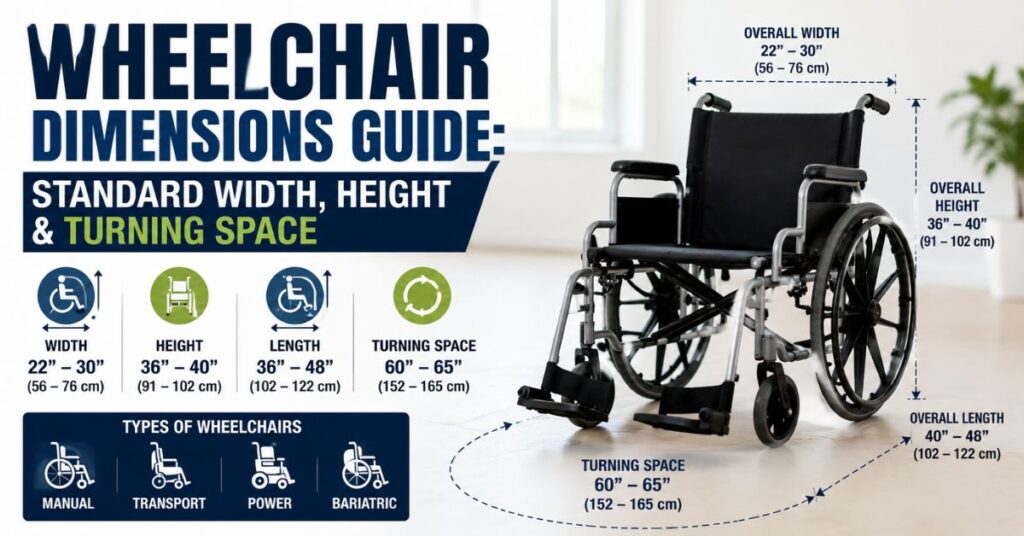
A standard adult wheelchair has a seat width of 18 inches, a seat depth of 16 inches, and an overall width near 25 inches, fitting most users between 5’4″ and 6’0″ tall and up to 250 pounds. Beyond that range, sizing shifts quickly.
This guide breaks down a full wheelchair size chart height and weight comparison across six common chair types, including manual, electric, bariatric, pediatric, transport, and lightweight models. Each section covers seat width, seat depth, seat height, and overall footprint, since these numbers decide whether a chair fits through a doorway, a bathroom, or a van lift.
Most sizing charts online only list seat width. This one also covers folded wheelchair dimensions and ADA doorway clearance, two details that matter just as much when you’re planning a home renovation or booking accessible transport. Real-world examples from brands like Invacare, Drive Medical, and Karman Healthcare are used throughout so the numbers reflect chairs people actually buy.
Read More About: 3 Feet Example 6 Surprising Everyday Comparisons
What Is a Standard Wheelchair Size?
Wheelchair dimensions vary by category, but manufacturers generally group chairs into a few sizing tiers based on seat width and weight capacity. Below is a quick breakdown before the detailed sections.
Quick Conversion Table
| Measurement | Inches | Centimeters | Feet |
| Seat width (standard) | 18 in | 45.7 cm | 1.5 ft |
| Seat depth (standard) | 16 in | 40.6 cm | 1.3 ft |
| Seat height | 19–20 in | 48–51 cm | 1.6 ft |
| Overall width | 25 in | 63.5 cm | 2.1 ft |
| Overall length | 42 in | 106.7 cm | 3.5 ft |
| Overall height (backrest) | 36 in | 91.4 cm | 3 ft |
Quick Reference Table
| Wheelchair Type | Approx. Measurement | Closeness Score (X/10) | Best Situation/Use |
| Standard Manual | 18″ seat width | 10/10 | Everyday indoor/outdoor use |
| Lightweight Transport | 16″ seat width, 34 lbs folded | 8/10 | Travel, caregiver-pushed |
| Bariatric | 22–30″ seat width | 9/10 | Higher weight capacity needs |
| Pediatric | 10–14″ seat width | 9/10 | Children and small teens |
| Power (Electric) | 20″ seat width, 250 lbs+ chair | 7/10 | Limited upper-body strength |
| Sports/Folding Rigid | 17″ seat width | 8/10 | Active users, tight turning |
How Wheelchair Dimensions Change by Type

Each wheelchair category is built around a different body size, weight capacity, and use case. The six examples below cover the most common types people search for when comparing wheelchair measurements.
Standard Manual Wheelchair
A standard manual wheelchair, the type used in most hospitals and rehab centers, has a seat width of 18 inches and a seat depth of 16 inches, according to specs published by Drive Medical and Invacare. Overall width lands near 25 inches, and overall length runs about 42 inches. These wheelchair overall width and length figures are what most ADA doorway charts reference as the baseline.
This size fits adults roughly 5’4″ to 6’0″ tall weighing up to 250 pounds, making it the default option for general hospital and home use. Anyone taller or heavier usually needs a bariatric or custom frame instead, since seat depth affects circulation and posture over long periods.
Lightweight Transport Chair

Transport wheelchairs, like the Drive Medical Cirrus, are built for caregiver-pushed movement rather than self-propulsion, with a folded width near 9 inches and a total folded footprint that fits in most car trunks. Seat width typically runs 16 to 18 inches, and the chair itself often weighs under 20 pounds, far lighter than a standard frame.
Key distinction: transport chairs skip the large rear wheels found on self-propelled models, which is why they’re narrower when folded but harder for a user to push independently. This makes wheelchair seat width alone a misleading number without also checking the frame weight.
Read More About: Things That Are 15 Feet Tall 6 Surprising Everyday Examples
Bariatric Wheelchair

Bariatric wheelchairs, such as the Karman Healthcare KM-BT10, are built with wider frames to support higher weight capacities, with seat widths ranging from 22 to 30 inches and weight capacities up to 700 pounds depending on the model. Overall width can reach 34 inches, which is wider than most standard interior doorways.
This matters practically because a 34-inch chair will not clear a standard 32-inch ADA doorway without added clearance, so bariatric wheelchair dimensions should always be checked against a home’s actual door widths before purchase, not just the manufacturer’s general size chart.
Pediatric Wheelchair
Pediatric wheelchairs, including models from Convaid and Sunrise Medical, are sized for children and smaller teens, with seat widths starting around 10 inches and depths near 10 to 14 inches. Overall length is typically 30 to 34 inches, roughly 20% shorter than an adult frame.
Something no competitor explained: many pediatric chairs use growth-adjustable frames, so the seat width and depth can expand by several inches as the child grows, delaying the need for a full replacement chair for a few years.
Power (Electric) Wheelchair

Electric wheelchair dimensions run larger than manual chairs because of the battery and motor housing. A Permobil M3 power wheelchair has a seat width near 20 inches and an overall length closer to 45 inches, with total chair weight often exceeding 250 pounds before the user sits down.
This added length affects wheelchair turning radius indoors, since power chairs generally need a 60-inch turning space compared to roughly 60 inches for manual chairs too, but the added chair length and weight reduce maneuverability in narrow hallways.
Sports and Rigid Folding Wheelchair
Sports and rigid-frame folding wheelchairs, like the Quickie 7R, are built narrower for active users, with seat widths near 17 inches and a lower overall width for tighter turns on courts or trails. These frames skip cross-brace folding hardware to reduce weight, often landing under 20 pounds for the frame alone.
The narrower wheelchair overall width, sometimes under 24 inches, makes these chairs easier to maneuver through narrow doorways or crowded spaces, though the tradeoff is a lower weight capacity than standard or bariatric frames.
Where Does Wheelchair Sizing Affect Home Accessibility?

Beyond the chair itself, ADA guidelines set minimum clearances for spaces a wheelchair needs to move through. A standard doorway should clear 32 inches, hallways need at least 36 inches of width, and a full wheelchair turning radius requires roughly 60 inches of open floor space. Bathrooms typically need 60 inches of clear turning space near the toilet and sink area. These numbers explain why a wheelchair size chart height and weight comparison alone isn’t enough when planning a renovation door and hallway width matter just as much as the chair’s seat dimensions.
Read More About: +30 Ammo Can Dimensions Common Military Storage Box Measurements
FAQ’s
What is the average wheelchair width?
The average wheelchair width is about 25 inches overall, with a seat width near 18 inches for standard adult manual chairs. Bariatric models run wider, up to 34 inches, while pediatric chairs measure narrower, often under 20 inches overall.
How wide is a standard wheelchair for doorways?
A standard wheelchair measures close to 25 inches wide overall, which fits through the ADA-required 32-inch doorway clearance with a few inches to spare. Wider bariatric chairs may need a widened doorway to pass through safely.
What is a wheelchair size chart height and weight based on?
A wheelchair size chart height and weight is based on seat width, seat depth, and the manufacturer’s stated weight capacity. Charts match user height to seat depth and user weight to frame strength, helping buyers pick a chair that fits both body size and support needs.
How much space does a wheelchair need to turn around?
A wheelchair typically needs about 60 inches of clear floor space to turn around completely. This is the standard ADA turning radius requirement used in bathroom, hallway, and doorway planning for both manual and power wheelchairs.
What are folded wheelchair dimensions for travel?
Most folded manual wheelchairs measure around 9 to 12 inches wide and under 30 inches long, fitting in a car trunk or overhead storage. Transport and lightweight models fold to the smallest footprint, while power wheelchairs generally do not fold at all.
Final Thought
From a compact pediatric frame near 10 inches wide to a bariatric chair stretching past 30 inches, wheelchair dimensions shift enormously based on the user’s height, weight, and daily needs. A standard manual chair at 18 inches seat width fits most adults, but transport, sports, and power models each solve a different problem, whether that’s travel weight, active mobility, or added support capacity. Before buying, measure the user’s hips and doorways first, then match those numbers against a wheelchair size chart height and weight guide like this one rather than guessing from a single “standard” figure.