
 Abdul Moeed
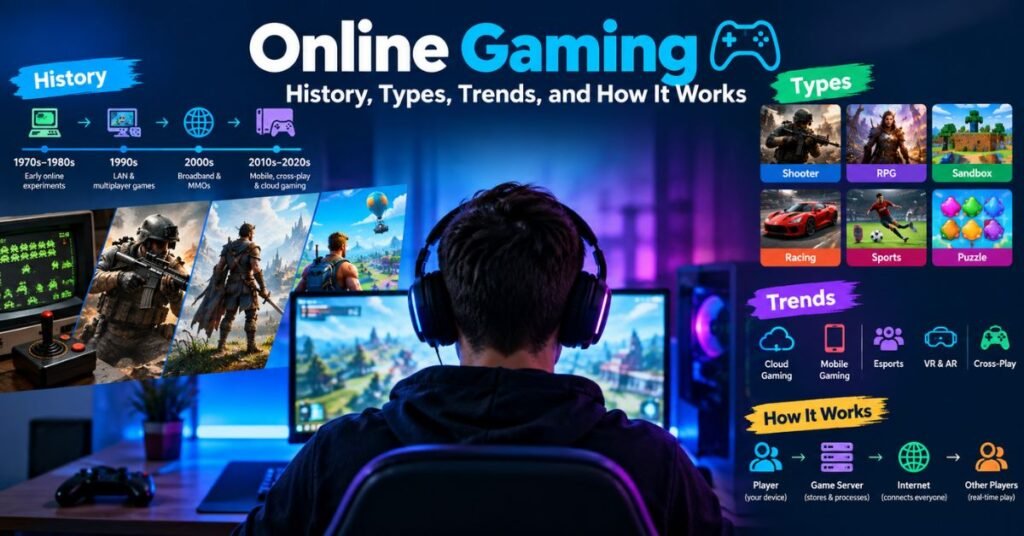
Picture a friend in Lagos, a teammate in Seoul, and you on a quiet couch. Within seconds, all three of you share one battlefield. That’s the magic of online gaming. Today, billions of people enjoy online games on phones, consoles, and PCs. In this guide, you’ll learn how online gaming works and where it’s heading. You’ll also see the main gaming trends and simple safety steps. Grab a snack and settle in.
What Is Online Gaming?
Ever wondered what online gaming is? It simply means playing video games over the internet. You can play alone or with others. Think of a game lobby as a busy park. Strangers walk in and leave as teammates. Every match runs through a gaming network that links players together. That link makes internet gaming feel alive. Without it, a game stays a lonely single-player story.
Online game players use many devices. Console gaming, PC gaming, and mobile gaming lead the pack. Even browser games run well on a basic laptop. The gaming industry now treats digital gaming as a giant form of digital entertainment. Some titles are simple, free puzzles. Others are huge worlds packed with millions of people. Each one delivers a different gaming experience.
Read More: Denago Golf Carts: 2026 Models, Features & Key Benefits
A Brief History of Online Gaming
Long before Wi-Fi, the history of online gaming began in university labs. In the 1960s, the PLATO system at the University of Illinois let students play together on shared terminals. In 1978, students at the University of Essex built MUD1. It was a text-based world where players chatted and explored in real-time gaming sessions. Then home dial-up modems arrived. That screeching sound still gives older players goosebumps. This evolution of online games started small but moved fast.
The 1990s brought faster change. Doom launched LAN parties and deathmatch fever. Ultima Online proved that persistent worlds could thrive. Xbox Live later opened console multiplayer games to living rooms everywhere. Steam reshaped PC gaming through digital sales. World of Warcraft then drew millions of subscribers. Fortnite and the phone boom pulled in everyone else. The table below shows the key steps.
| Year | Milestone | Why It Matters |
| 1960s | PLATO | First shared online play on school terminals |
| 1978 | MUD1 | Text worlds with live chat |
| 1993 | Doom | Network deathmatch through LAN and modem |
| 1997 | Ultima Online | Early persistent online world |
| 2002 | Xbox Live | Set the standard for console online service |
| 2003 | Steam | Digital PC store with automatic updates |
| 2004 | World of Warcraft | Made online role-playing a mass hit |
| 2017 | Fortnite | Free-to-play play across many devices |
How Online Gaming Works
Ever asked how does online gaming work? Your device, called the client, sends your actions to game servers. The servers track the match and send results back to every player. Think of a restaurant. You order, the kitchen cooks, and the waiter carries messages. Your internet connection acts as that waiter. A slow waiter means cold food. In games, that delay is called latency. It sits at the heart of online multiplayer gaming.
A few key terms matter here. Ping measures the round trip time in milliseconds. Lag happens when that time grows too long. Bandwidth is the amount of data your line can carry. Matchmaking pairs you with players of similar skill. Some games use peer-to-peer links between players. Others use dedicated servers for fairness and speed. Strong gaming performance depends on all these pieces. Modern online gaming technology keeps improving each part.
Popular Types of Online Games
There’s an online game for every mood. You might want a quick round on your phone. Or you might crave a long quest with friends. The types of online games fall into four main groups. Each group offers a different pace and goal. This view helps you choose faster. It also gives online gaming for beginners a comfortable place to start.
The table below compares the groups. Use it as a quick map before you dive in. Many titles mix styles. The lines can blur. Still, this view gives you a clear start.
| Type | Play Style | Typical Session | Example Genres |
| Multiplayer | Team or free-for-all | 15 to 40 minutes | Battle royale, shooters |
| Role-playing | Story and growth | Several hours | MMORPGs, action RPGs |
| Competitive | Ranked and skill-based | 20 to 60 minutes | MOBAs, fighting games |
| Casual and social | Relaxed and short | 5 to 15 minutes | Puzzle, card, party games |
Multiplayer Online Games
Few things beat teaming up with friends. Multiplayer games let you join co-op missions or fight in player-versus-player modes. Battle royale titles drop dozens of players on one map. Squad shooters focus on tight teamwork. Server capacity and player count shape the fun. Multiplayer gameplay works best when matches start fast and stay smooth. Online multiplayer gaming now fills lobbies around the clock across PC multiplayer games and console favorites.
Online Role-Playing Games
Want a world that never sleeps? Online games in this genre build persistent worlds. You create a character, finish quests, and join a guild. MMORPGs like World of Warcraft grew whole towns of loyal fans. Live-service titles add new content for years. Game progression feels personal here. Your hero grows stronger with every session. Friends slowly become trusted allies. Many players say the social bonds matter more than the loot.
Competitive and Esports Games
Some players crave a scoreboard. Competitive gaming rewards skill, strategy, and quick thinking. Ranked ladders sort players by ability. MOBAs, fighting games, and tactical shooters lead this space. Top players may even join esports tournaments with big prize pools. Competitive gameplay looks simple to learn. Mastering it takes years. These competitive online games also shape esports culture around the world. That challenge keeps fans hooked.
Casual and Social Games
Not everyone wants a hardcore grind. Casual games offer short and relaxed fun. Puzzle games, card games, and party games fill this group. Most are free to download. Many run as browser games or phone apps. That low barrier explains why social gaming exploded worldwide. You can play during a coffee break. Friends can join with one tap. Grandparents often join the fun too.
Online Gaming Features and Experiences

What makes these worlds feel alive? Other people do. Real humans act in unpredictable ways. That mix keeps every match fresh. Modern online gaming platforms blend play, chat, and shopping in one place. Together these tools shape the whole gaming experience. Let’s look at four big features that define it.
Live updates matter too. Game developers release seasons, events, and fixes on a steady schedule. These gaming updates give players a reason to return. A good title can stay fresh for a decade. That’s a huge shift from old boxed games. It also shows the power of interactive gaming experiences.
Multiplayer Gameplay
Team play sits at the core of online fun. You join a lobby, form a squad, and invite pals from your friend list. Party systems keep your group together between matches. Good multiplayer gameplay balances teams fairly. It also cuts waiting time. These multiplayer online experiences turn strangers into regular teammates. Some of the best multiplayer gaming experiences come from simple co-op nights with close friends.
In-Game Communication
Talking makes teamwork click. In-game communication includes voice chat, text chat, emotes, and ping markers. A quick ping can warn a friend about danger. Clear callouts often win close matches. However, open chat can attract rude players. Good gaming platforms offer mute, block, and report tools. Use them without guilt. They keep the online gaming community friendlier for everyone.
Progression and Rewards
Everyone loves a good prize. Game progression gives you levels, XP, and unlockable gear. Rewards and achievements mark your milestones along the way. Battle passes add seasonal goals with bonus items. Loot boxes and microtransactions also exist. They can add fun. They can also drain your wallet. Check your spending options before you buy. Honest design earns player trust.
Read More: NicksGoltCarts.Com: Golf Carts, UTVs & Dealer Guide 2026
Cross-Platform Gaming
What if your friend plays on a different device? Cross-platform gaming solves that problem. Crossplay lets PC, console, and phone users share one match. Cross-progression carries your saves between devices. A single account ties everything together. Fortnite and Rocket League made this idea popular. The result is a bigger pool of players and shorter waits. Your friends no longer need identical hardware.
Latest Online Gaming Trends
Online gaming never stands still. New devices, faster networks, and smarter tools arrive every year. The latest online gaming trends change how you play and watch. They also change how the gaming industry earns money. Below, you’ll find four shifts worth tracking. Each one shapes the future of online gaming.
Smarter software is spreading too. Matchmaking now uses data to build fair teams. Recent tech coverage points to upscaling and frame generation tools arriving on phones. Those tools work like the tricks used on PC graphics cards. They could lift gaming performance on small screens. Reports of hot-running flagship phones show the limits. Still, progress looks steady. For deeper market numbers, check.
Cloud Gaming
Cloud gaming streams a game from a remote server to your screen. You don’t need a strong PC. Cloud gaming explained in one line: the heavy work happens far away. GeForce Now, Xbox Cloud Gaming, and PlayStation Plus streaming follow this model. Cloud-based gaming needs a steady internet connection. Input lag can still annoy fast-paced players. Even so, this option lowers the cost of entry for many families.
Mobile Online Gaming
Your phone is now a serious game machine. Mobile gaming leads the world in player count. Mobile online games range from puzzle hits to big shooters. Android handhelds and gaming phones push things further. Fast chips help. However, heat can slow performance. Experts call this thermal throttling. Keep it in mind when you read mobile online gaming trends. A cooler phone often plays better than a faster one.
Esports and Competitive Gaming
Watching pros play has become a global habit. Esports draws huge crowds on Twitch and YouTube. Esports tournaments offer big prize pools and loyal fans. Pro teams train like athletes. Coaches study replays for weak spots. The link between online gaming and esports keeps growing. Competitive gaming is now a real career path. Yet only a tiny share of players ever reach that level.
Gaming Communities and Social Play
Games feel better with friends. Discord servers, clans, and fan groups anchor modern player communities. Creators add gaming content like streams, clips, and guides. Modders build new maps and rules. This creativity extends a game’s life. Online gaming communities also teach newcomers the ropes. A strong gaming community feels like a clubhouse. Shared jokes and shared wins build lasting online gaming culture.
Online Gaming Reviews and Guides
Every week brings dozens of new titles. Nobody can try them all. Smart game reviews help you pick wisely. Good coverage also saves money. It warns you about weak servers and pushy shops. That’s why online gaming reviews and guides matter so much to modern players. They act like a friendly guide at a crowded market.
Four content types work together. Reviews help you choose. Guides help you learn. How-tos fix problems. Features explain the big picture. Together they build trust. They also give gaming news more context. Keep this mix in mind as you browse.
Game Reviews
A fair review checks more than graphics. It tests gaming performance, value, server stability, and monetization. Reviewers also flag game releases that launch broken. Hardware reviews cover handhelds and controllers. Look for tested frame rates and honest downsides. Read two or three opinions before you buy. That habit protects your wallet. It also helps you spot hype from real quality.
Gaming Guides and Walkthroughs
Stuck on a boss? Gaming guides can save your evening. Beginner guides explain the basics. Tier lists rank characters by strength. Build guides show the best gear paths. Walkthroughs lead you through story levels step by step. Good gaming tutorials also teach controls and settings. These resources suit online gaming for beginners especially well. Bookmark a few favorites for later.
How-To Gaming Tips
Sometimes the problem isn’t the game. Your Wi-Fi may drop or your account may fail to link. Handy how-to tips walk you through fixes. Common examples include connecting a console to Wi-Fi, linking a PlayStation app, and cutting lag. Wired connections often beat wireless ones. Restarting the router helps more than you’d think. Small gaming accessories, like a LAN cable or a better headset, can also help.
Gaming Features and Analysis
Features go deeper than reviews. They test benchmarks, explain industry shifts, and track patterns. One recent tech feature compared flagship phone chips in real games. It reported that benchmark scores didn’t tell the full story. That’s a useful lesson. Numbers help. Real testing helps more. Analysis pieces also cover gaming technology and the wider gaming industry. They give you the “why” behind the headlines.
Benefits and Challenges of Online Gaming

Online gaming brings real joy. It also brings real risks. The benefits of online gaming include friendship, fun, and skill building. The challenges of online gaming include scams, spending, and screen time. A balanced view helps you decide what fits your life. Neither side tells the whole story alone.
The table below sums up both sides. Read it as a quick reality check. Most problems shrink with smart habits.
| Benefits | Challenges |
| Friendships across borders | Phishing and scams |
| Teamwork and problem-solving | Long screen time |
| Stress relief and fun | Overspending on extras |
| Low-cost entertainment | Toxic chat |
Social Interaction and Entertainment
Games bring people together. Friends split by time zones can still team up every weekend. Here’s a case study. During the 2020 lockdowns, Fortnite hosted a live in-game concert with rapper Travis Scott. Reports at the time said more than 12 million players joined at once. Many could not meet in person. They still shared the show. That moment proved how strong social gaming can be as digital entertainment.
Privacy and Security Concerns
Every account holds personal data. Criminals target that data. Phishing emails pretend to be game support. Fake giveaways steal logins. Account takeover can wipe out years of progress. Strong account security protects you. Careful player privacy helps too. Learn the basics of gaming security and gaming privacy early. Never share login codes with anyone. Real support teams don’t ask for them.
Screen Time and Responsible Gaming
Fun should stay fun. Responsible gaming means setting limits and taking breaks. Watch for warning signs like lost sleep or dropped hobbies. The includes gaming disorder in its disease classification. Most players never come close to that point. Parental controls help families set healthy rules. A simple timer can work wonders. Balance keeps the hobby joyful for years.
Online Gaming Safety Tips
One weak password can cost you years of progress. Online gaming safety starts with small habits. These habits take only minutes. They protect your account security for a long time. Follow these online gaming safety tips to lock things down fast. Each one blocks a common trick that criminals use.
| Tip | Why It Helps |
| Use unique passwords and a password manager | One leak can’t open every account |
| Turn on two-factor authentication | Stolen passwords stop working |
| Never share login codes | Real support never asks for them |
| Buy only from official stores | Avoids fake keys and malware |
| Use block, mute, and report tools | Cuts toxic chat quickly |
| Check privacy settings on every platform | Protects your player privacy |
| Skip cheat software | Avoids malware and permanent bans |
| Set parental controls and spending limits | Keeps kids safe and bills low |
Kids need extra care. Parents can set spending caps and chat limits. Talk openly about strangers online. Ask children to tell you when something feels wrong. Here’s a simple rule of thumb to share with any player.
If a game hurts your sleep, your studies, or your mood, take a break.
What Is the Future of Online Gaming?
What happens when any game runs on any screen? That future is closer than you think. Cloud gaming, 5G networks, and crossplay all push in that direction. Faster networks cut lag. Cheaper devices open doors. The future of online gaming looks wide open. More regions will join the gaming industry boom. New players will bring fresh ideas and new stories.
Artificial intelligence may reshape game worlds. Smarter non-player characters could talk more naturally. Virtual and augmented reality offer new ways to play. The metaverse idea sounds exciting. However, hype often runs ahead of real products. Watch for practical progress instead. Expect modern gaming platforms to blend play, video, and social life into one place.
Frequently Asked Questions
What is online gaming?
Online gaming means playing video games over the internet. Players connect through game servers and share the same match in real time. You can play on a phone, console, or PC. Some games are free. Others need a purchase or a subscription. Most rely on a steady internet connection.
What are the most popular types of online games?
The four main groups are multiplayer, role-playing, competitive, and casual online games. Fortnite fits the multiplayer group. World of Warcraft fits role-playing. League of Legends suits competitive play. Puzzle and card apps cover casual fun. Each group appeals to a different style of player.
Is online gaming safe?
Mostly yes. Smart habits make the difference. Turn on two-factor authentication. Use strong passwords. Tighten your privacy settings. Avoid strangers who ask for personal details. Parents can add parental controls. With these steps, online gaming stays safer and more fun.
What is the difference between online gaming and esports?
Online gaming means playing over the internet for any reason. Esports means organized, competitive play. It has rules, teams, referees, and prizes. Most online game players never compete professionally. Think of casual jogging versus running a marathon. Both involve running. Only one comes with a finish-line crowd.
How is cloud gaming changing online games?
Cloud gaming runs games on remote servers and streams them to your screen. You need less powerful hardware. That lowers the cost of entry. Still, you need a steady connection. Fast wired networks work best. Expect this model to grow as networks improve.