
 Abdul Moeed
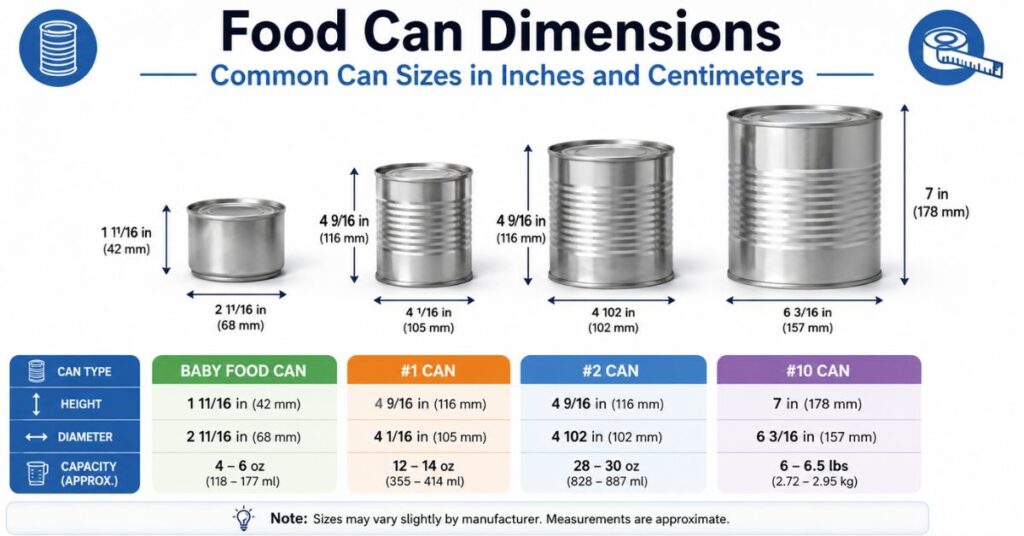
A typical soup can measure about 3 inches (7.6 cm) in diameter and 4.4 inches (11.2 cm) tall, holding roughly 10.5 to 15 ounces. But that’s just one of many standard can dimensions used across the food industry.
If you’ve ever stood in a pantry aisle wondering why one “can of tomatoes” looks nothing like another, you’re not imagining things.Food Can Dimensions Standard food can sizes range from tiny 5-ounce tuna tins to massive #10 institutional cans that hold nearly a gallon. Each size follows industry naming conventions like #300, #2, or #10 that most home cooks have never heard explained in plain English.
This guide breaks down standard can dimensions for six everyday food cans soup, vegetable, coffee, tuna, pet food, and the giant #10 can with exact height, diameter, and capacity in both inches and centimeters, ounces and milliliters. Unlike most size charts online, we’ll also cover why these dimensions were standardized in the first place, and how to estimate a can’s size without ever pulling out a tape measure.
What Are Standard Can Dimensions?
Standard can dimensions refer to the fixed height, diameter, and volume measurements that steel and aluminum food manufacturers use to keep packaging consistent across brands. Food Can Dimensions In the United States, these food can measurements are organized under a numbering system created decades ago by the canning industry, later maintained by groups like the Can Manufacturers Institute (CMI).
Instead of every brand choosing random container shapes, a company like Campbell’s or Del Monte selects from a known set of can dimensions in inches for example, a “#303 can” or a “#10 can.” This keeps shelving, labeling, and shipping predictable for grocery retailers nationwide. Food Can Dimensions It’s also why two competing brands of canned corn almost always sit at the same height on a store shelf.
Knowing standard can dimensions helps with more than trivia. It matters for pantry organization, recipe scaling, food storage planning, and even DIY projects that repurpose empty cans.Food Can Dimensions A person converting a recipe that calls for “one #10 cans of crushed tomatoes” needs to know that’s roughly 109 ounces not the 14.5-ounce can sitting in their cupboard.
Read More About: What Does 2 Feet Look Like? 6 Everyday Examples You Can Relate To
Quick Conversion Table
Cylindrical food cans are measured using several related units. Here’s how standard dimensions can convert across the measurement systems most commonly used in the U.S. and internationally.
| Unit | Approximate Conversion |
| 1 inch | 2.54 centimeters |
| 1 fluid ounce | 29.57 milliliters |
| 1 fluid ounce | 0.0296 liters |
| 1 pound (net weight) | 16 ounces |
| 1 liter | 33.8 fluid ounces |
| 1 centimeter | 0.39 inches |
| 1 gallon | 128 fluid ounces |
These conversions apply whether you’re checking food can dimensions in cm for an imported product or converting a recipe’s ounce measurement into liters for a metric kitchen scale.
Quick Reference Table: Common Food Can Sizes
This can size chart compares six standard food cans by approximate measurement, how closely they match a “typical” can shape, and their best real-world use.
| Can Type | Approx. Dimensions (H x D) | Approx. Capacity | Closeness Score (X/10) | Best Situation/Use |
| Soup Can (#300) | 4.4″ x 3.0″ (11.2 x 7.6 cm) | 10.5–15 oz | 9/10 | Condensed soups, single-serving sauces |
| Vegetable/Tomato Can (#303) | 4.4″ x 3.2″ (11.2 x 8.1 cm) | 14.5–17 oz | 8/10 | Canned vegetables, diced tomatoes |
| Coffee Can | 7″ x 5″ (17.8 x 12.7 cm) | 30.5 oz | 6/10 | Ground coffee, bulk dry storage |
| Tuna Can | 1.2″ x 3.2″ (3.0 x 8.1 cm) | 5–6 oz | 5/10 | Fish, small portioned proteins |
| Pet Food Can | 4.0″ x 3.0″ (10.2 x 7.6 cm) | 12.5–13 oz | 8/10 | Wet dog or cat food |
| #10 Can | 7.0″ x 6.2″ (17.8 x 15.7 cm) | 96–109 oz | 4/10 | Food service, bulk pantry storage |
Common Food Can Sizes Explained

The Standard Soup Can
The classic condensed soup can, often called a #300 can, measures about 3 inches in diameter and 4.4 inches tall, holding between 10.5 and 15 ounces depending on the product. Campbell’s, the brand most associated with this shape, has used a version of this can size for over a century, and it remains one of the most recognizable examples of standard can dimensions in American grocery stores. In metric terms, that’s roughly 7.6 cm wide and 11.2 cm tall.
This size matters practically because it sets the baseline most people picture when they hear “a can of something.” Recipes that say “one can of soup” almost always assume this exact capacity, which is why substituting a larger vegetable can without adjusting liquid ratios can throw off a dish. Something no competitor explained clearly: the #300 designation actually refers to the can’s height and diameter code from old canning-industry charts, not its ounce weight, which is why two “#300” cans can carry slightly different net weights.
Canned Vegetables and Tomatoes
Standard vegetable and tomato cans typically use the #303 size, measuring close to 3.2 inches in diameter and 4.4 inches in height, with a capacity between 14.5 and 17 ounces. Brands like Del Monte and Hunt’s rely on this shape for corn, green beans, and diced tomatoes. Food Can Dimensions It’s slightly wider than a soup can, which gives it a few extra ounces of canned food dimensions without adding much height.
This size is useful to know when doubling a recipe, since many cooks assume all cans are interchangeable when they’re actually not. A #303 can holds about 20% more volume than a #300 soup can, which can noticeably change the consistency of a sauce or stew if swapped in without adjusting other ingredients.
Read More About: 30 Gram Berapa Ons The Easy Grams to Ounces Guide
The Large #10 Institutional Can
The #10 can is the giant of standard food can sizes, standing about 7 inches tall with a 6.2-inch diameter, and holding 96 to 109 ounces roughly 6 to 7 pounds of food. This large food can size is common in restaurants, school cafeterias, and food banks rather than home kitchens, and it’s the standard container for bulk canned tomatoes, beans, and fruit used by food service operations across the U.S. Foodservice suppliers like US Foods and Sysco commonly list #10 cans in their catalogs using this exact commercial food can dimension.
Key distinction: unlike smaller retail cans, #10 cans are almost never sold individually to consumers, which is why most people have never handled one despite it being one of the most common food packaging dimensions in professional kitchens. Once opened, a #10 can typically need to be transferred to storage containers since it doesn’t reseal well and is too large to refrigerate as-is.
The Standard Coffee Can
A traditional metal coffee can measures roughly 7 inches tall and 5 inches in diameter, historically holding 30.5 ounces of ground coffee, though many modern coffee brands like Folgers and Maxwell House have shifted to plastic tubs of similar can dimensions in inches rather than steel.Food Can Dimensions This size is taller and wider than a typical soup or vegetable can, giving it enough volume for weeks of daily brewing.
The coffee can’s dimensions also made it a popular reuse item for decades from pantry organization to workshop storage because its wide mouth and sturdy metal food can sizes made it more versatile than narrower cans. Food Can Dimensions Even now, “coffee can size” is a common informal unit people use to describe container capacity, even outside the coffee aisle.
The Small Tuna Can
Tuna cans are among the shortest standard can dimensions in any pantry, measuring about 1.2 inches tall with a 3.2-inch diameter, and holding roughly 5 to 6 ounces. Brands such as StarKist and Chicken of the Sea use this flatter, wider shape because it suits solid fish better than a taller cylinder; the shorter food can reduce pressure on delicate fish flesh during processing and stacking.
This shape difference is a good example of how canned goods sizes aren’t just about volume; the ratio of diameter to height changes based on what’s inside. Food Can Dimensions A tuna can holds far less than a soup can despite having a similar or larger diameter, simply because it’s so much shorter. That’s a useful distinction when estimating pantry storage space by can type rather than just by ounces.
The Standard Pet Food Can
Wet pet food cans, commonly used by brands like Purina and Fancy Feast’s larger sizes, measure close to 3 inches in diameter and 4 inches tall, holding about 12.5 to 13 ounces nearly identical to a soup can’s food storage can dimensions. This similarity isn’t a coincidence; pet food manufacturers often use the same tooling and can-forming equipment as human food producers to keep production costs down.
Read More About: 2.5 Inches Example 6 Surprising Everyday Objects
Because pet food cans closely match standard food can sizes used for soup, they stack and store the same way in a pantry, which is handy for anyone organizing shared storage space. It’s also why an empty pet food can is sometimes mistaken for a soup can at a glance, despite completely different contents.
Where Do Standard Dimensions Appear in Daily Life?

Beyond the grocery shelf, standard can dimensions influence shipping box design, warehouse pallet layouts, and even recycling bin sorting equipment, which is often calibrated to recognize common food can height and diameter ranges. Food Can Dimensions Grocery store shelving is typically spaced in increments that accommodate the tallest standard sizes meaning a #10 can’s dimensions can literally determine how far apart shelves are bolted in a stockroom.
Vending machines, meal-kit delivery boxes, and food bank donation bins are also designed around these same commercial food can sizes. A donation bin built for standard 4-to-5-inch-tall cans may reject a taller coffee can or reject a #10 can entirely because it exceeds the opening size. Food Can Dimensions Even can openers are engineered around expected food can diameter ranges, which is part of why oddly-shaped imported cans sometimes don’t fit standard kitchen tools.
FAQ’s
What are the standard can dimensions for a soup can?
A standard soup can measure about 3 inches in diameter and 4.4 inches tall, holding 10.5 to 15 ounces. This #300 can size is the most common reference point people picture when discussing standard can dimensions in the U.S.
How tall is a food can on average?
Most standard food can sizes range from 1.2 inches (tuna cans) to 7 inches (coffee and #10 cans). The exact food height depends heavily on the product inside, since flatter foods like fish use shorter, wider shapes than liquids or beans.
What is the diameter of a food can?
Food can diameter typically ranges from 3 inches for soup and vegetable cans up to about 6.2 inches for large #10 cans. Diameter, along with height, determines total capacity and how the can stacks on store shelves.
How do I measure a can’s dimensions without a ruler?
You can estimate can dimensions in inches by comparing it to a standard soda can, which is about 4.8 inches tall and 2.6 inches wide, or a dollar bill, which is 6.14 inches long. Lining these known objects against a can gives a rough but usable measurement without tools.
What is a #10 can and how big is it?
A #10 can is the largest common commercial food can, standing about 7 inches tall with a 6.2-inch diameter and holding 96 to 109 ounces. It’s mainly used in restaurants and food service rather than sold directly to home shoppers.
Final Thoughts
Standard can dimensions aren’t random they follow a decades-old system that keeps packaging predictable across brands, from a compact tuna tin to a towering #10 institutional can. Knowing these food can measurements makes it easier to substitute ingredients correctly, plan pantry storage, and understand why a “can of tomatoes” from one brand can look so different from another.
Whether you’re comparing a soup can’s 3-inch diameter to a coffee can’s 5-inch width, or figuring out how many soup cans equal one #10 can, understanding standard can dimensions turns a confusing grocery aisle into something a lot easier to navigate. Next time you’re stacking cans in the pantry, you’ll know exactly why they line up the way they do.