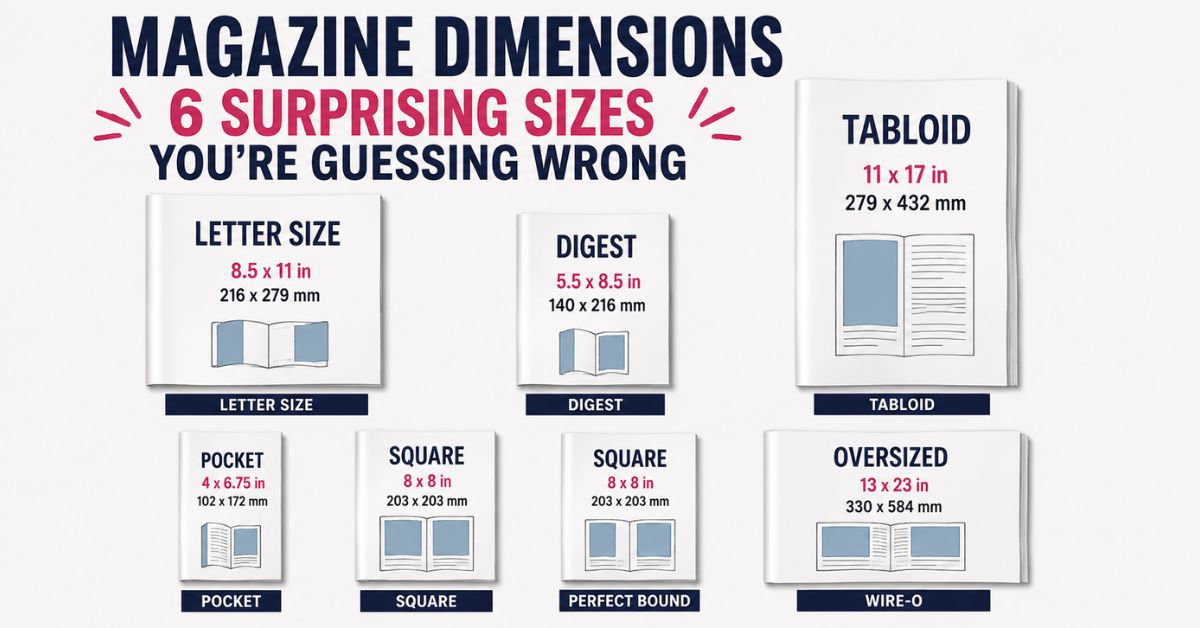
Magazine Dimensions 6 Surprising Sizes You’re Guessing Wrong
The most common magazine dimensions in the US measure 8 x 10.875 inches (20.3 x 27.6 cm), the standard trim size used by publishers like Time and People. But that’s only one of several standard formats. Magazine dimensions actually shift depending on the country, the printing method, and the type of publication being produced.
This article breaks down six real-world magazine dimensions from the digest size tucked into a mailbox to the oversized fashion glossy on a newsstand shelf. Along the way, you’ll see how magazine trim size, magazine page size, and magazine cover dimensions all connect, plus a few details most printing guides skip entirely, like why spine width and bleed margins quietly change your final page count.
Whether you’re a designer setting up a print-ready file in Adobe InDesign or just someone wondering how big a magazine really is compared to a sheet of printer paper, this guide covers the full range of magazine measurements you’ll actually run into.
What Are Standard Magazine Dimensions?
Magazine dimensions describe the finished, trimmed size of a printed publication the width and height of each page after cutting, not the raw paper size before trimming. In the United States, magazine dimensions are almost always expressed in inches, while most of the rest of the world uses centimeters or the ISO paper system, particularly A4.
There isn’t one single “correct” magazine size. Instead, the industry works with a handful of standard magazine size categories: full-size (sometimes called “magazine” or “bookazine” trim), digest, tabloid, and A4. Each one balances printing cost, postage weight, shelf visibility, and reader convenience differently, which is why a fashion magazine and a Sunday church bulletin can look so different despite both technically being “magazines.”
Read More: How Big Is 9 Inches? 6 Surprising Everyday Comparisons
Quick Magazine Dimensions Conversion Table
| Unit | Standard US Magazine (8 x 10.875 in) |
| Inches | 8 x 10.875 in |
| Centimeters | 20.3 x 27.6 cm |
| Millimeters | 203 x 276 mm |
| Feet | 0.67 x 0.91 ft |
| A4 Equivalent (closest) | 8.27 x 11.69 in (210 x 297 mm) |
Quick Reference Table: Common Magazine Sizes
| Object | Approx. Measurement | Closeness Score (X/10) | Best Situation/Use |
| US Letter-Size Magazine | 8.5 x 11 in | 9/10 | Standard printer paper compatibility |
| Digest-Size Magazine | 5.5 x 8.5 in | 8/10 | Mailed subscriptions, compact reading |
| A4 Magazine | 8.27 x 11.69 in | 10/10 | European and international print runs |
| Tabloid Fashion Magazine | 9 x 10.875 in | 7/10 | Newsstand visibility, glossy ad spreads |
| Comic Book Magazine | 6.625 x 10.25 in | 6/10 | Collector-friendly, saddle-stitched runs |
| Square Lifestyle Magazine | 8.5 x 8.5 in | 5/10 | Coffee-table appeal, design-forward brands |
Common Magazine Dimensions and Sizes
US Letter-Size Magazine
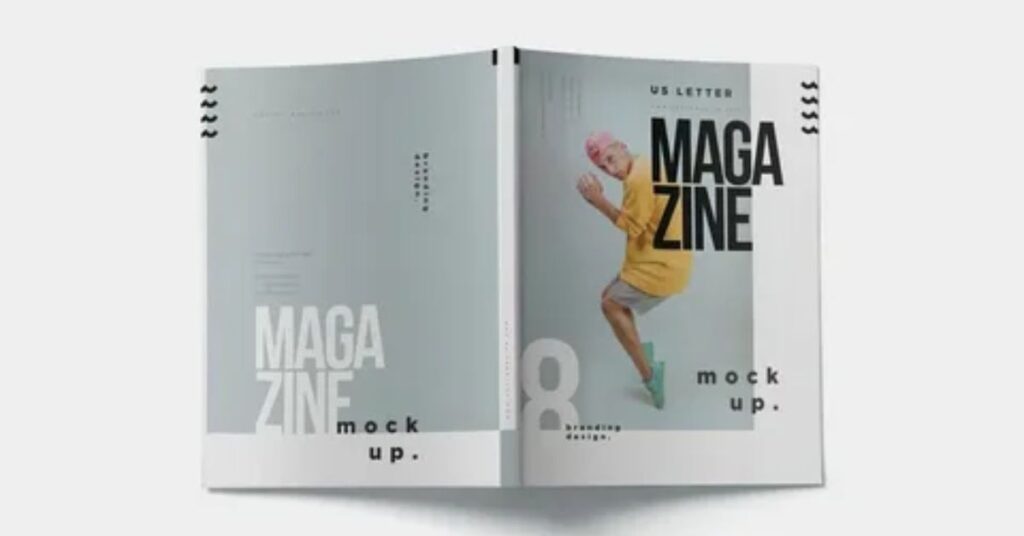
The US letter-size magazine measures 8.5 x 11 inches (21.6 x 27.9 cm), matching standard US Letter paper. Many smaller-circulation publications, newsletters, and self-published magazines use this magazine size chart entry because it lines up exactly with home and office printers. Companies producing short-run print magazine dimensions often default here to avoid custom trimming costs.
This size matters practically because it skips the extra step of ordering non-standard paper stock. For self-publishers using print-on-demand services like Lulu or Blurb, sticking to letter-size magazine dimensions in inches keeps unit costs predictably low, especially for early print runs under a few hundred copies.
Digest-Size Magazine

A digest-size magazine measures 5.5 x 8.5 inches (14 x 21.6 cm) essentially a US Letter sheet folded in half. Reader’s Digest popularized this format decades ago, and it’s still common for literary journals, pulp fiction reprints, and religious or community publications that prioritize portability over visual impact.
Digest magazine size works well when postage cost and reader convenience matter more than large-format photography. Something no competitor explained: the smaller trim also reduces paper waste per unit, which is one reason digest-format magazines survived so long in mail-subscription models even after larger formats became cheaper to print offset.
A4 Magazine
The A4 magazine dimensions are 210 x 297 mm, or 8.27 x 11.69 inches the ISO 216 paper standard used across Europe, Asia, Australia, and most of the world outside North America. A4 magazine size is functionally the international counterpart to the US letter-size magazine, and it’s the default magazine paper size in InDesign templates built for non-US clients.
Key distinction: unlike the US system, A4 belongs to a mathematically consistent size family (A3, A4, A5), so every fold and spread scales predictably. That’s why international publishers, printers, and design agencies working across borders often standardize on A4 magazine dimensions rather than juggling separate US and metric templates.
Tabloid Fashion Magazine

Large fashion and lifestyle titles like Vogue and Elle historically used a bigger tabloid-style trim, close to 9 x 10.875 inches (22.9 x 27.6 cm), though many have since shifted closer to standard sizes to cut printing costs. This oversized magazine cover dimensions approach maximizes visual real estate for photography and full-bleed advertising spreads, which matters heavily in fashion and luxury advertising.
The tradeoff is cost: larger magazine width and height means more paper per copy, higher shipping weight, and pricier offset printing runs. Publishers only choose this magazine layout size when advertisers are paying a premium for that extra visual space.
Read More: Aluminum Can Diameter 6 Surprising Sizes You’re Guessing Wrong
Comic Book Magazine
Comic books and many manga-style magazines use a smaller trim size of about 6.625 x 10.25 inches (16.8 x 26 cm), a format standardized decades ago by US comic publishers and still followed by companies like Marvel and DC Comics. This narrower magazine trim size fits naturally with saddle-stitched binding, which is why nearly all monthly single-issue comics share it.
This magazine size guide entry matters for anyone designing a serialized print product: the narrower width keeps per-page printing costs down while still giving artists a tall enough panel area for sequential storytelling layouts.
Square Lifestyle Magazine
Some design-forward titles think shelter and lifestyle magazines like Real Simple or Martha Stewart Living in certain editions use a square trim near 8.5 x 8.5 inches (21.6 x 21.6 cm). This custom magazine size breaks from the rectangular norm specifically for shelf differentiation and a more “coffee-table object” feel.
Practically, square formats cost more per copy because they don’t nest efficiently onto standard press sheets, creating more trim waste. Brands accept that extra cost specifically because the unusual magazine measurements make the title stand out physically next to conventional rectangular competitors on a newsstand or table display.
How Magazine Dimensions Affect Print Production
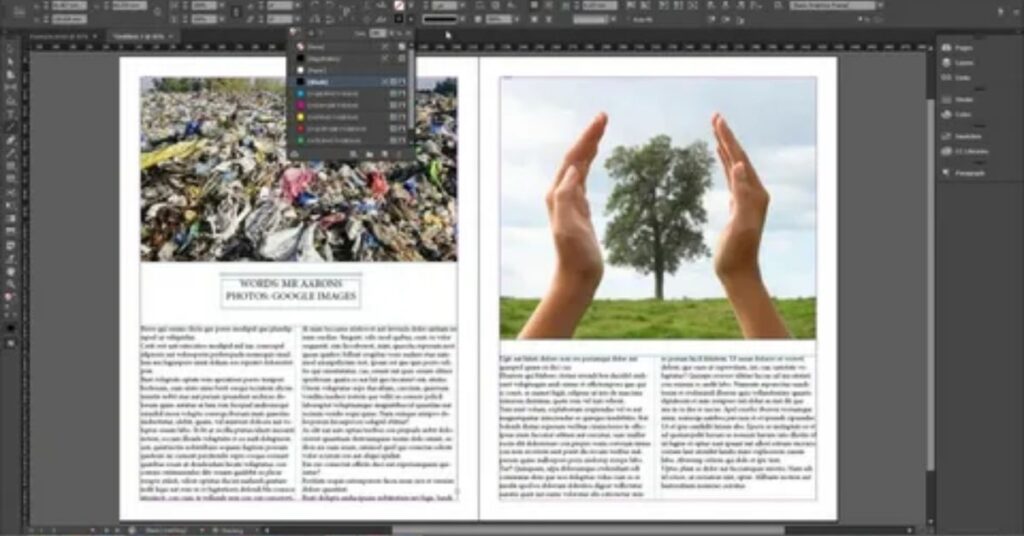
Magazine dimensions don’t exist in isolation they interact directly with bleed margins, trim marks, and spine width once a design moves into production. A full-bleed photo needs artwork extended past the trim line (usually 0.125 inches) so that no white edge appears after cutting, and every print-ready magazine size template in InDesign should build this margin in from the start.
Spine width also depends on total page count and paper stock thickness, which is why a 32-page saddle-stitched magazine and a 200-page perfect bound magazine of the same trim size still require completely different cover templates. CMYK color settings and print resolution (usually 300 DPI) round out the technical side of magazine design dimensions that most size charts skip over.
Read More: 3 Ounces 6 Surprising Everyday Things That Weigh This Much
FAQ’s
What are normal magazine dimensions?
Most magazines are about 8.5 × 11 inches (21.6 × 27.9 cm), though sizes vary by publisher. Digest and A4 formats are also common.
Are magazines A3 or A4?
Most magazines are closer to A4 size than A3. A3 is much larger and is mainly used for posters, newspapers, or folded publications.
Is Vogue magazine A4 size?
No, Vogue is slightly larger than A4, measuring approximately 8.5 × 11 inches (21.6 × 27.9 cm). Its larger format gives photos and layouts a premium look.
What is the size of A4 magazine in CM?
An A4 magazine measures 21 × 29.7 cm (210 × 297 mm). This is one of the most common sizes for magazines, catalogs, and brochures.
What is the standard magazine size in the US?
The standard US magazine size is 8 x 10.875 inches. This trim size is widely used by major consumer magazines because it balances newsstand visibility with manageable printing and shipping costs across large circulation runs.
How big is a magazine compared to a piece of paper?
A typical magazine is close to, but slightly smaller than, a US Letter sheet. Standard magazine dimensions (8 x 10.875 in) trim a bit off both the width and height of a full 8.5 x 11 inch letter page after binding and cutting.
What are magazine dimensions in cm?
Standard magazine dimensions in cm are roughly 20.3 x 27.6 cm for the common 8 x 10.875 inch US trim, or 21 x 29.7 cm for an A4 magazine, which is the more common size outside North America.
Is A4 a good magazine size for printing?
Yes, A4 magazine dimensions (210 x 297 mm) are the most widely used size internationally. It fits standard printer stock, scales cleanly with other ISO paper sizes, and is the default magazine paper size for most non-US print shops.
What size is a digest magazine?
A digest-size magazine measures 5.5 x 8.5 inches. It’s essentially a folded US Letter sheet, favored for smaller-circulation, mail-based, or budget-conscious publications that don’t need large-format photography.
Final Thoughts
From the compact 5.5 x 8.5 inch digest to the wide 9 x 10.875 inch fashion tabloid, magazine dimensions vary far more than most readers realize. The standard 8 x 10.875 inch US trim remains the most common magazine size, while A4 dominates internationally, and niche formats like square trims or comic-book sizing exist for very specific design and cost reasons.
If you’re planning a print run, start with your audience and budget, then match your magazine dimensions to the closest standard trim size before customizing further. Getting this decision right early saves real money once a project moves from layout software into an actual offset or digital press run.