
50 Feet Visualized 6 Surprising Everyday Comparisons
50 feet equals 15.24 meters, 600 inches, or 1,524 centimeters about the width of an NBA basketball court or the length of a standard semi-truck trailer. That single fact answers the most common question people type into Google, but numbers alone rarely stick in memory.
This guide takes 50 feet visualized a step further by lining the measurement up against six everyday objects most Americans have already stood next to, driven past, or walked across. Instead of just reading a conversion chart, you’ll see how 50 feet stacks up against a basketball court, a truck trailer, a five-story building, a utility pole, a mature oak tree, and a humpback whale.
Most measurement-comparison pages stop at the conversion table and call it done. This one goes further by explaining why each object’s dimensions were standardized the way they were details that rarely make it into competing articles, but that make the size comparison actually mean something.
How Big Is 50 Feet?
Fifty feet sits right in the middle ground between “small enough to picture” and “big enough to need a reference object.” It’s taller than a two-story house, shorter than most city blocks, and roughly the height of a five-story building. Because it shows up so often in construction, sports, and transportation, 50 feet is one of the more useful everyday size examples to actually memorize.
Below is the full breakdown of 50 feet across the units people search for most, followed by a quick-reference comparison chart before we walk through each object individually.
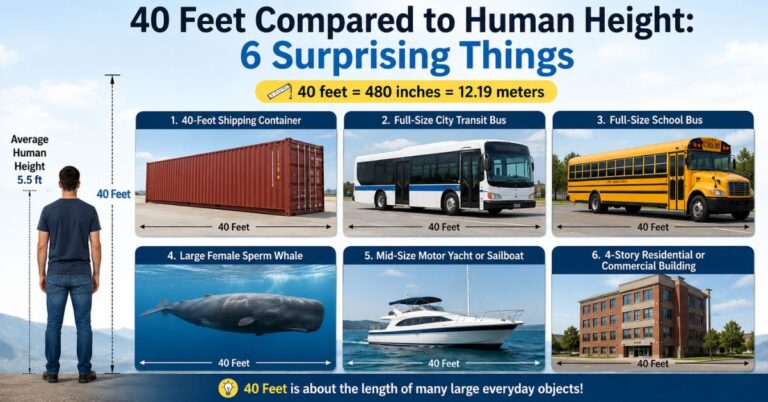
Read More: 40 Feet Compared to Human Height: 6 Surprising Things
Quick Conversion Table
| Unit | Value |
| Feet | 50 ft |
| Inches | 600 in |
| Yards | 16.67 yd |
| Meters | 15.24 m |
| Centimeters | 1,524 cm |
| Millimeters | 15,240 mm |
This 50 ft measurement conversion covers the units people ask about most, but the numbers still feel abstract without something physical to anchor them to which is where the object comparisons below come in.
Quick Reference Table
| Object | Approx. Measurement | Closeness Score (X/10) | Best Situation/Use |
| NBA Basketball Court (width) | 50 ft | 10/10 | Sports & recreation planning |
| Semi-Truck Trailer | 48–53 ft | 9/10 | Shipping & logistics |
| Five-Story Building | ~50 ft | 8/10 | Construction & real estate |
| Utility/Telephone Pole | 40–50 ft | 7/10 | Home improvement & outdoor projects |
| Mature Oak Tree | 50–60 ft | 7/10 | Landscaping & yard planning |
| Humpback Whale | 48–52 ft | 8/10 | Marine biology & travel |
50 Feet Compared to Everyday Objects
An NBA Basketball Court’s Width
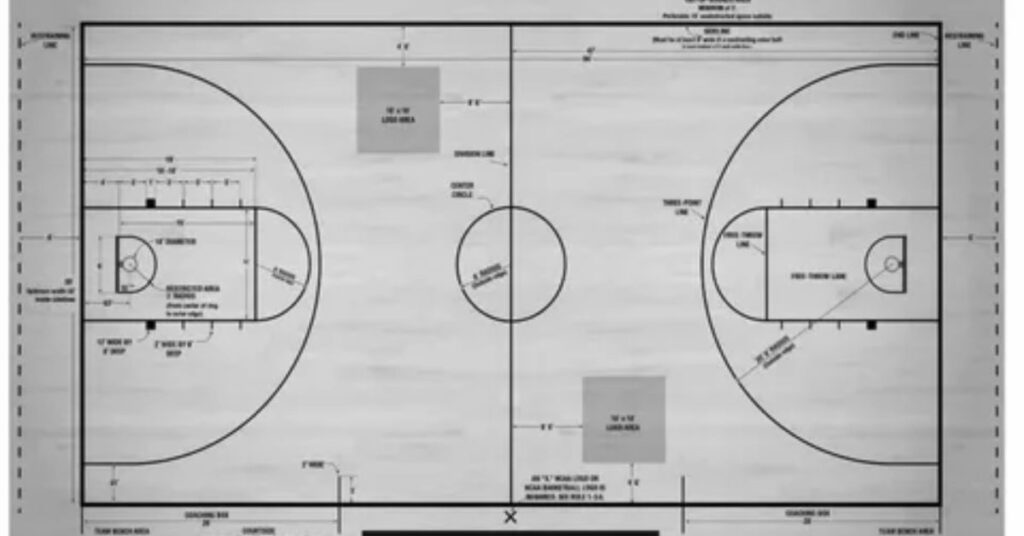
According to official NBA rules, a regulation basketball court measures exactly 50 feet wide, while its length runs 94 feet. That width is one of the cleanest, most exact real-life size comparisons available, since it isn’t an average or estimate it’s a fixed rule enforced at every professional and college-regulation court in the country.
Knowing this makes the measurement easy to recreate without a tape measure. Anyone who has stood at one sideline of a basketball court and looked across to the other has already seen 50 feet in person, whether they realized it or not.
Key distinction: unlike most objects on this list, the basketball court’s width isn’t a natural or average size it’s a fixed, official standard, which makes it the most precise entry here.
A Standard Semi-Truck Trailer
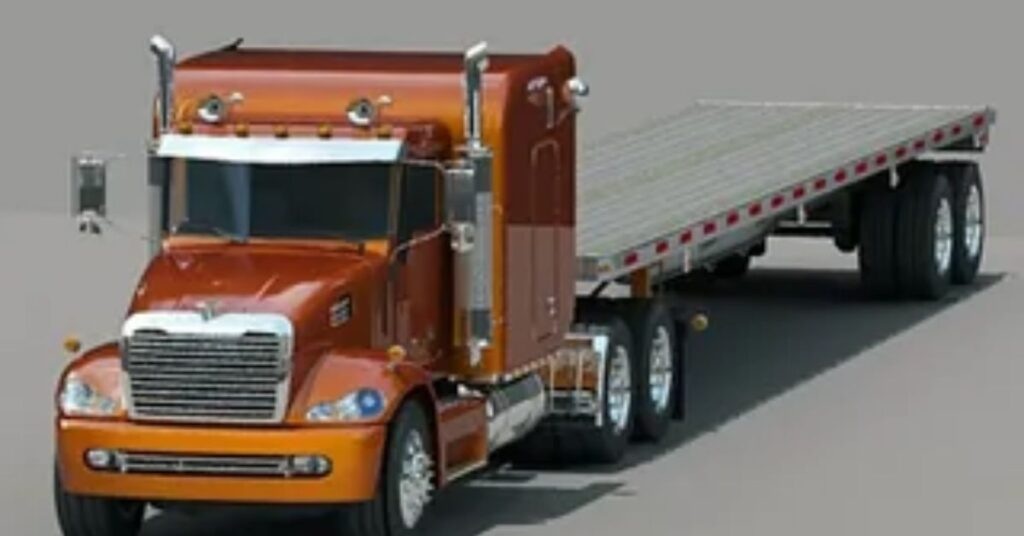
Standard dry-van trailers used across the U.S. trucking industry typically run 48 to 53 feet long, with the 53-foot trailer being the industry standard for interstate freight, per federal highway length regulations. That places a fully loaded trailer almost exactly at the 50 ft measurement mark, making it one of the most common things that are 50 feet long on public roads today.
This matters practically because trailer length directly affects loading dock design, warehouse spacing, and turning radius requirements engineering measurements that logistics companies plan around daily.
Read More: Water Bottle Dimensions in Inches and CM Complete Measurement Guide
A Five-Story Building
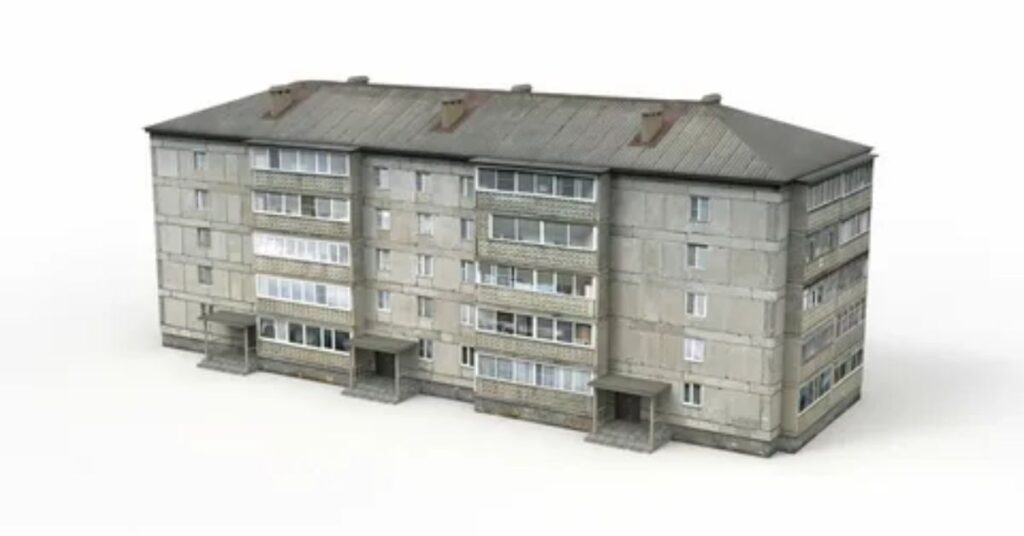
Commercial construction generally allows roughly 10 to 12 feet per floor, which puts a five-story building at approximately 50 feet tall, a benchmark often referenced in municipal building codes and zoning documents. It’s one of the more relatable height comparisons for anyone picturing 50 feet in an urban setting rather than a rural one.
This height also matters in fire-safety planning, since many fire department ladder trucks are rated with this kind of building height in mind, tying the measurement directly to real safety standards.
A Utility or Telephone Pole

Standard wooden utility poles installed by U.S. power companies typically range from 40 to 50 feet tall above ground, according to specifications commonly used by utility providers like those following American National Standards Institute (ANSI) guidelines. Taller 50-foot poles are common in areas needing extra clearance for higher-voltage lines.
Something no competitor explained: the portion of the pole visible above ground is only part of the story installers typically bury an additional 10% of the total pole length, meaning a “50-foot pole” is often closer to 55 feet of actual material.
A Mature Oak Tree
A fully mature oak tree commonly reaches 50 to 60 feet in height, according to arborist references from organizations like the Arbor Day Foundation. That makes oaks one of the most familiar things that are 50 feet tall in residential neighborhoods, parks, and along older streets where they’ve had decades to grow undisturbed.
This height matters for homeowners because it affects safe planting distance from houses, power lines, and property lines a common home improvement and landscaping measurement consideration.
A Humpback Whale
Adult humpback whales typically measure 48 to 52 feet in length, based on data tracked by NOAA Fisheries, making them one of the largest living things that regularly reach right around the 50-foot mark. Their size is often used in marine biology and whale-watching contexts as a real-world distance reference for visitors trying to grasp ocean-animal scale.
This comparison matters because it reframes 50 feet as more than a construction or sports measurement it shows the same length appearing in nature, at a scale most people never get to observe up close.
Read More: 3.5 Inches in Real Life 6 Common Items for Size Reference
Where Does 50 Feet Appear in Daily Life?
Fifty feet shows up more often than most people notice: it’s roughly ten adult strides, about three parked cars end to end, and close to the depth of a typical suburban front yard. Construction crews use it as a rough lot-width benchmark, event planners use it to space tents and stages, and drivers unconsciously judge it every time they merge in front of a trailer truck. Once you’ve mentally locked in a few of the objects above, spotting 50 feet in the wild becomes much easier.
FAQ’s
How big is 50 feet compared to a human?
A typical adult is about 5.5–6 feet tall, so 50 feet is roughly as tall as 8–9 adults standing on each other’s shoulders.
How to visualize 1 foot?
One foot equals 12 inches (30.48 cm), about the length of an adult’s shoe or a standard ruler.
What does 50 cubic feet look like?
50 cubic feet is a volume, not a length. It’s about the storage space of a large household refrigerator or a box measuring 5 ft × 5 ft × 2 ft.
How tall is 50 stories in feet?
A 50-story building is typically 500–700 feet (152–213 meters) tall, depending on the building’s floor-to-floor height and design.
How long is 50 feet in meters?
50 feet equals 15.24 meters. This conversion is exact and doesn’t round unevenly, which is why it’s the most commonly cited metric equivalent when comparing American measurements to international standards.
How tall is 50 feet compared to a building?
50 feet is about the height of a five-story building, assuming roughly 10 feet per floor. It’s taller than most two-story homes but shorter than a typical ten-story office tower.
Is 50 feet a lot for a backyard?
It can be. A 50-foot-deep backyard is on the smaller side for suburban lots but still enough space for a patio, small lawn, and modest landscaping, depending on local zoning minimums.
What everyday object is closest to 50 feet visualized?
An NBA basketball court’s width is the closest exact real-world match, since it’s officially set at exactly 50 feet, unlike most natural objects that only average close to that length.
How can I measure 50 feet without a tape measure?
Count roughly 17 to 20 adult walking strides, since most adults average 2.5 to 3 feet per stride. It won’t be perfectly precise, but it’s a fast way to estimate 50 feet measurement in the field.
Final Thoughts
Seeing 50 feet visualized against real objects a basketball court’s width, a semi-truck trailer, a five-story building, a utility pole, a mature oak tree, and a humpback whale turns an abstract number into something you can picture instantly. Whether you’re planning a construction project, sizing up a backyard, or just satisfying curiosity, these everyday size examples make the 15.24-meter, 600-inch measurement far easier to hold onto. Next time you need a mental shortcut for 50 feet, picture the one object from this list closest to your situation, and the length will make sense immediately.