
 Abdul Moeed
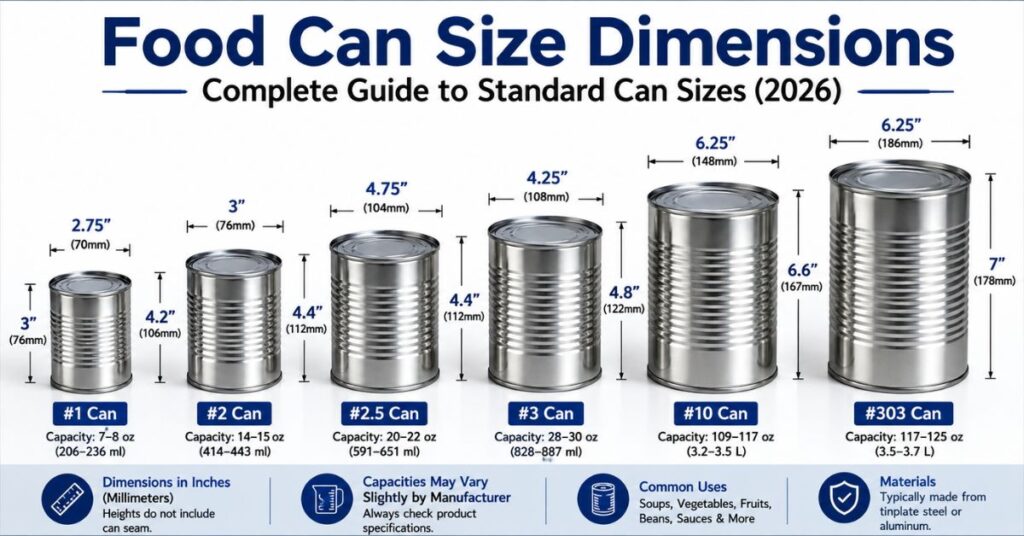
A standard food can ranges from about 2.6 inches tall (a small tuna can) to over 7 inches tall (a #10 institutional can), with diameters between 2.1 and 6.8 inches. That’s a much bigger spread than most shoppers realize when they glance at a pantry shelf.
Food can sizes aren’t random. Food Can Size Dimensions The metal packaging industry settled on a handful of standard shapes decades ago so factories, grocery stores, and home kitchens could all work from the same measurements. This article breaks down six everyday cans, shows their real food can dimensions in inches and centimeters, and compares them side by side so you can actually picture the difference before you open a cupboard.
Most guides just list capacity in ounces and stop there. What they skip and what we cover here is how height and can diameter each affect stacking, storage, and even how fast the metal cools during commercial canning. That detail matters if you’re organizing a pantry or comparing canned goods dimensions before a bulk order.
How Big Food Can Size Dimensions?
Can manufacturers use a numbering system left over from early 20th-century canning standards you’ll still see cans labeled #1, #2, #300, #303, and #10 in commercial and food service settings. Each number corresponds to a fixed food can height and food can diameter, not just a volume estimate. Understanding food can sizes this way makes it much easier to compare products without pulling out a ruler every time.
Read More About: Kitchen Trash Can Size Dimensions 7 Common Sizes Explained
Home cooks mostly deal with three or four of these sizes. Restaurants, cafeterias, and food banks deal with a wider range, including the large #10 can be used for bulk canned vegetables and canned fruits. Below, we’ll walk through six real examples with their actual dimensions.
Quick Conversion Table
| Unit | Approximate Value (Standard Soup Can) |
| Height (inches) | 4.25 in |
| Height (centimeters) | 10.8 cm |
| Diameter (inches) | 3.0 in |
| Diameter (centimeters) | 7.6 cm |
| Capacity (fluid ounces) | 10.75 fl oz |
| Capacity (milliliters) | ~318 mL |
| Capacity (cups) | ~1.3 cups |
Quick Reference Table
| Object | Approx. Measurement | Closeness Score (X/10) | Best Situation/Use |
| Small Tuna Can | 2.6 in tall, 3.3 in diameter | 3/10 | Single-serving protein, camping |
| Standard Soup Can | 4.25 in tall, 3.0 in diameter | 10/10 | Everyday pantry staple |
| #300 Vegetable Can | 4.0 in tall, 3.1 in diameter | 8/10 | Family-size side dishes |
| #303 Fruit/Tomato Can | 4.5 in tall, 3.2 in diameter | 8/10 | Sauces, canned fruit |
| Coffee Can (13 oz) | 5.0 in tall, 4.1 in diameter | 5/10 | Dry goods, repurposed storage |
| #10 Institutional Can | 7.0 in tall, 6.8 in diameter | 4/10 | Restaurants, food banks, bulk cooking |
Common Food Can Sizes Explained
The Small Tuna Can

A typical tuna can, the kind StarKist and Bumble Bee use for their standard product line, measures roughly 2.6 inches tall with a 3.3-inch diameter, holding about 5 ounces of fish. It’s one of the shortest entries in any food can sizes chart, built specifically to keep the tuna in a thin, flat layer for even packing and easy draining.
The short, wide shape isn’t just for looks a flatter can means less surface exposure during processing, which helps preserve texture. That’s why tuna, salmon, and some canned meats use this squat profile instead of the taller shape common in soups.
The Standard Soup Can
Campbell’s iconic soup can, arguably the most recognizable of all food can sizes, stands 4.25 inches tall with a 3-inch diameter and holds 10.75 fluid ounces. This is technically labeled a “#1 picnic” size in older industry charts, though most people just call it “a soup can.” One food can measurements detail competitors rarely mention: this exact shape was standardized partly because it fits efficiently on rail and truck pallets with minimal wasted space.
Because this size is so common, it’s often used as the mental benchmark people compare other cans to including in our reference table above. If you’re estimating an unfamiliar can’s size, picturing a soup can is usually the fastest shortcut.
The #300 Vegetable Can

A #300 cans, used widely for canned green beans, corn, and peas, measures about 4.0 inches tall with a 3.1-inch diameter, holding roughly 14.5 ounces. Del Monte and Green Giant both use this can size across most of their standard vegetable lines. It sits in the middle of the food can size chart bigger than a tuna can but shorter than a #303.
This size became the default for single-vegetable sides because it matches a typical 3-4 person serving without leftovers going to waste. Grocery stores also favor it because the height allows tighter shelf stacking than taller cans.
The #303 Fruit and Tomato Can
The #The 303 can, standard for canned tomatoes, fruit cocktail, and beans, measures around 4.5 inches tall with a 3.2-inch diameter, holding about 16 to 17 ounces. Hunt’s and Del Monte both rely on this size for tomato products specifically because the slightly taller shape reduces headspace, which helps liquid-heavy contents like tomato sauce settle evenly.
Key distinction: unlike the #300 can, the #303 was designed with acidic foods in mind tomatoes and fruit require different interior lacquer coatings to prevent metal reacting with the acid, something the can’s size alone won’t tell you but is worth knowing before comparing steel food cans by shape alone.
The Coffee Can

A standard 13-ounce coffee can, the kind Folgers and Maxwell House commonly package, measures close to 5.0 inches tall with a 4.1-inch diameter. Coffee cans are wider and shorter relative to their capacity than most food cans, since coffee grounds are lightweight and need more surface area exposed to preserve freshness during transport.
This shape also explains why coffee cans are the most repurposed food storage can size in American kitchens; the wide mouth and stable base make them useful for holding utensils, dry pantry goods, or garden supplies long after the coffee is gone.
The #10 Institutional Can
The largest common entry in any food can sizes chart, the #10 can, measures approximately 7 inches tall with a 6.8-inch diameter, holding around 109 ounces (roughly 3.1 kilograms) of food. Restaurant suppliers and food banks use this commercial food can size for bulk vegetables, sauces, and soups because it dramatically cuts down on packaging waste per ounce compared to smaller cans.
Something no competitor explained clearly: a #A 10 can isn’t just a scaled-up soup, the metal gauge is thicker to handle the added weight and pressure during commercial canning, so it doesn’t dent or buckle the way a thinner household might under the same stacking load.
Where Do Food Sizes Show Up in Daily Life?
Beyond the pantry, food can sizes influence recipe writing, meal planning, and grocery budgeting. A recipe calling for “one can of tomatoes” almost always assumes a #303 can unless stated otherwise, while bulk cooking blogs referencing a #10 cans are usually written for large families or food service settings. Vending and camping supply catalogs also lean on tuna-can-sized dimensions when listing compact, shelf-stable food options.
Read More About: Paint Can Size Dimensions The Ultimate Guide to Standard Paint Can Sizes
Knowing these food measurements ahead of time helps you convert recipes accurately, whether you’re scaling a family dinner up for a potluck or scaling a bulk recipe down for two people.
FAQ’s
What are the most common food can sizes in the U.S.?
The most common sizes are the #1 (tuna), soup can, #300, #303, and #10 institutional can. These cover the vast majority of canned vegetables, soups, fruits, and bulk food service products sold in American grocery stores and restaurants.
How tall is a standard food can?
Most standard food can sizes range from 4 to 4.5 inches tall. Smaller cans like tuna sit closer to 2.6 inches, while large institutional #10 cans can reach 7 inches, so height varies significantly by can type and intended use.
What is the standard size of a can?
A standard food can vary by product, but many common cans are about 4 — 4.9 inches (10 — 12.5 cm) tall and 3 inches (7.6 cm) in diameter. Sizes are usually identified by can numbers such as #300 or #303.
How big is a size 10 can?
A #10 can typically measure about 7 inches (17.8 cm) tall and 6.25 inches (15.9 cm) in diameter. It holds approximately 109–117 fluid ounces (3–3.5 liters).
What are the dimensions of a 28 oz can?
A 28 oz food can is generally about 4.9 inches (12.4 cm) tall and 3.3 inches (8.4 cm) in diameter. Exact dimensions may vary slightly by manufacturer.
How big is a 20 oz can?
A 20 oz food can is typically around 4 inches (10.2 cm) tall and 3 inches (7.6 cm) in diameter. The exact size depends on the type of food and the brand.
Final Thoughts
From the compact tuna can to the oversized #10 institutional can, food can sizes cover a wider range than most shoppers expect roughly 2.6 to 7 inches in height alone. Soup cans, vegetable cans, and fruit cans each settled into their specific dimensions for practical reasons, from shelf stacking to food acidity to serving size.
Next time you’re comparing canned goods dimensions at the store or scaling a recipe, use the soup can as your mental yardstick. It’s the size most other food can sizes get measured against. A quick glance at the can’s height and diameter tells you more about what’s inside than the label alone.