
 Abdul Moeed
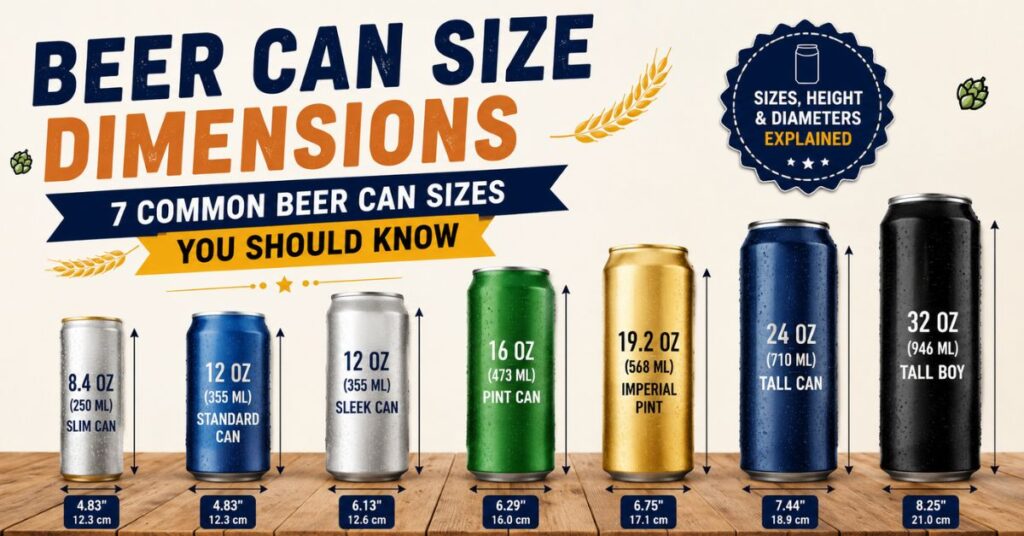
A standard 12 oz beer can is 4.83 inches (12.3 cm) tall and 2.6 inches (6.6 cm) in diameter. That’s the number most people picture when they ask how tall a beer can, but the honest answer depends on which size you’re holding.
This guide breaks down beer can size dimensions across the six most common formats sold in the U.S. from the stubby 8 oz mini to the towering 24 oz can with exact height, diameter, and volume for each. If you’ve ever wondered how tall a beer can is compared to a soda can or a water bottle, the numbers below make it easy to compare at a glance. You’ll also get quick conversion and comparison tables so you don’t have to dig through spec sheets.
More Post: 40kg The Ultimate Guide to Everyday Weight Comparisons (2026)
Most articles on beer can dimensions only cover the 12 oz can and call it a day. What they skip is how much the diameter changes between a “slim” can and a “standard” can even when the volume is identical, and why that detail matters if you’re designing packaging, building a cooler insert, or just settling a bar bet. We cover that here.
What Is Beer Can Size Dimensions
When someone asks how tall a beer can is without specifying a size, they almost always mean the classic 12 oz aluminum can the one used by Budweiser, Coors, and most domestic breweries since the 1970s. According to the Can Manufacturers Institute, this can measures 4.83 inches tall and 2.6 inches wide at its widest point, holding 355 milliliters of liquid.
That height-to-width ratio isn’t random. Aluminum makers like Ball Corporation and Crown Holdings engineer it to stack efficiently on pallets, fit standard vending machines, and survive the pressure of carbonation without buckling. Every other can size on this list is a variation of that same basic engineering.
If you measure beer can dimensions without a ruler, you can estimate: a standard can is a little shorter than a dollar bill turned sideways twice, and roughly as wide as two stacked quarters. It’s a rough trick, but it works when someone asks how tall a beer can and you don’t have a tape measure handy.
Quick Conversion Table
| Unit | 12 oz Standard Can Height |
| Inches | 4.83 in |
| Centimeters | 12.3 cm |
| Millimeters | 122.7 mm |
| Feet | 0.4 ft |
| Diameter (inches) | 2.6 in |
| Diameter (cm) | 6.6 cm |
Quick Reference Table
| Object | Approx. Measurement | Closeness Score (X/10) | Best Situation/Use |
| 8 oz Mini Can | 3.75 in tall | 4/10 | Tastings, low-ABV sessions |
| 12 oz Standard Can | 4.83 in tall | 10/10 | Everyday domestic beer |
| 12 oz Slim Can | 5.9 in tall | 6/10 | Craft beer, seltzers |
| 16 oz Tallboy | 6.13 in tall | 8/10 | Craft beer, IPAs |
| 19.2 oz Stovepipe | 7.4 in tall | 5/10 | Convenience-store singles |
| 24 oz Can | 8.3 in tall | 6/10 | Malt liquor, budget beer |
Beer Can Dimensions by Size
The 8 oz Mini Can

The 8 oz mini can, popularized by brands like Coors Banquet and Heineken for tasting flights, stands about 3.75 inches tall with a diameter close to 2.1 inches. It holds roughly 237 milliliters, making it the shortest can on shelves. Beer can height at this size is intentionally compact so breweries can fit more units into sampler packs.
More Post: The Complete Beverage Can Size Dimensions Guide for Every Drink
This size matters for anyone comparing beer can measurements across a lineup it’s the baseline “small” reference point. Something no competitor explained: the 8 oz can uses a narrower neck taper than the 12 oz version, which is why it looks proportionally stubbier rather than just a scaled-down standard can.
So if someone asks how tall is a beer can at this small size specifically, 3.75 inches is the number to remember it’s close to a foot shorter than a 24 oz can standing right next to it.
The 12 oz Standard Can

This is the can most people picture when they ask how tall a beer can is. It measures 4.83 inches tall and 2.6 inches wide, a shape used by Anheuser-Busch, MillerCoors, and Yuengling. It carries the classic 12 oz (355 ml) volume that’s been the U.S. industry default since aluminum cans replaced steel in the 1960s and ’70s.
Because this is the reference size, beer can size chart comparisons almost always list it first. If you’re stocking a standard fridge shelf or cooler, this is the dimension to design around. It’s the one virtually every can rack and koozie is built to fit.
This is also the size people mean nearly every time they type “how tall is a beer can” into a search bar without adding a specific ounce count, since it’s the default can most Americans grew up drinking from.
The 12 oz Slim Can
Slim cans, used by White Claw, Truly, and many craft breweries, hold the same 12 oz volume but are taller and narrower about 5.9 inches tall with a diameter around 2.13 inches. The beer can diameter shrinks noticeably compared to the standard can, even though the capacity stays identical.
Key distinction: slim cans exist for branding and shelf presence, not efficiency. They cost more to produce per unit than standard cans because the taller shape needs extra aluminum and different can-line tooling, according to packaging reports from the Aluminum Association.
It’s a good example of why the answer to how tall a beer can shift even when the ounce count stays exactly the same shape, not just volume, drives the final height.
The 16 oz Tallboy

The tallboy is a favorite for craft IPAs and stouts from breweries like Sierra Nevada and Dogfish Head. It stands about 6.13 inches tall and 2.6 inches in diameter, holding a full 16 oz (473 ml). Beer can height jumps significantly here compared to the 12 oz version, while the diameter stays close to the standard can’s width.
This size is popular with drinkers who want fewer can changes per session, and with breweries because the extra surface area gives more room for label art. It’s also the size most often confused with the 19.2 oz “stovepipe” can, which looks similar but is noticeably taller.
Anyone asking how tall a beer can in this format should picture something a little over an inch and a quarter taller than the standard 12 oz can sitting beside it.
The 19.2 oz Stovepipe Can

Sold mostly as a single-serve convenience-store item by brands like Busch and Natural Light, the stovepipe can measure roughly 7.4 inches tall with a diameter near 2.6 inches. It holds 19.2 oz (568 ml) more than a pint. This is one of the tallest common beer can dimensions on regular retail shelves.
Its narrow, elongated shape earned it the “stovepipe” nickname, and it’s a useful reference when discussing beer can measurements for anyone comparing single-serve formats to multipacks. It won’t fit most six-pack carriers, which is part of why it’s sold individually.
At 7.4 inches, it also answers a slightly different version of how tall a beer can is — the “biggest single-serve option you’ll find in a gas-station cooler” version.
The 24 oz Can
The 24 oz can, common for malt liquor brands like Steel Reserve and Colt 45, stands about 8.3 inches tall with a diameter around 2.6 inches, holding 24 oz (710 ml). It’s the tallest widely available beer can size, roughly double the volume of a mini 8 oz can while sharing a similar diameter to the standard 12 oz can.
For anyone building a cooler insert, pantry shelf, or vending display, this is the size that determines your maximum clearance height. Aluminum beer can dimensions at this scale also mean a thicker can wall is used to prevent buckling under carbonation pressure, per specifications published by can manufacturers like Ball Corporation.
When people ask how tall a beer can is at its absolute maximum common size, this 24 oz format is usually the answer it’s the tallest one you’ll typically see stocked on a regular retail shelf rather than a specialty or novelty item.
Where Does Beer Size Appear in Daily Life?
Beer can influence dimensions more than what’s in your hand at a barbecue. Vending machine slots, six-pack ring molds, cooler shelf spacing, and even recycling bin sorting equipment are engineered around these standard heights and diameters. A cooler built for 12 oz standard cans, for example, often can’t fit a 24 oz can upright without adjusting the shelf.
More Post: What Weighs 25kg? 6 Surprising Everyday Items
Grocery stores also use these beverage can dimensions to plan shelf depth a slim can and a standard can take up different footprint space even at the same 12 oz volume, which is why slim seltzers sometimes get their own narrower shelf section instead of sharing space with standard beer cans.
FAQ’s
How tall is a standard beer can?
A standard 12 oz (355 ml) beer can is about 4.83 inches (12.3 cm) tall. It typically has a diameter of 2.6 inches (6.6 cm).
How tall is a 12 beer can?
A 12 oz beer can is approximately 4.83 inches (12.3 cm) tall. This is the most common size for canned beer in North America.
How tall is a 250ml can?
A 250 ml beer or beverage can is usually around 5.3 inches (13.4 cm) tall. The exact height may vary slightly depending on the manufacturer.
What size is a tall can of beer?
A tall can of beer is typically 16 oz (473 ml) and measures about 6.2 inches (15.7 cm) in height. It’s commonly known as a tallboy can.
What are the dimensions of a 12 oz beer can?
A standard 12 oz beer can is 4.83 inches tall and 2.6 inches in diameter, holding 355 ml. A 12 oz slim can shares the same volume but stands taller, at about 5.9 inches, with a slimmer 2.13-inch diameter.
Is a 16 oz tallboy a lot bigger than a standard can?
Yes — a 16 oz tallboy is about 1.3 inches taller than a standard 12 oz can and holds a third more liquid. It’s a popular choice among craft breweries because the extra height gives more room for label branding.
Final Thoughts
From the compact 8 oz mini to the towering 24 oz can, beer can size dimensions vary more than most drinkers realize. The 12 oz standard can remains the benchmark at 4.83 inches tall, but tallboys, slim cans, and stovepipe formats each solve a different practical or branding problem. Whether you’re comparing beer can measurements for a cooler build, a vending machine, or just curious how tall is a beer can compared to the one in your fridge, these six sizes cover nearly everything you’ll find on a store shelf. Next time you grab a can, you’ll know exactly what you’re holding and why it’s shaped that way.