
 Abdul Moeed
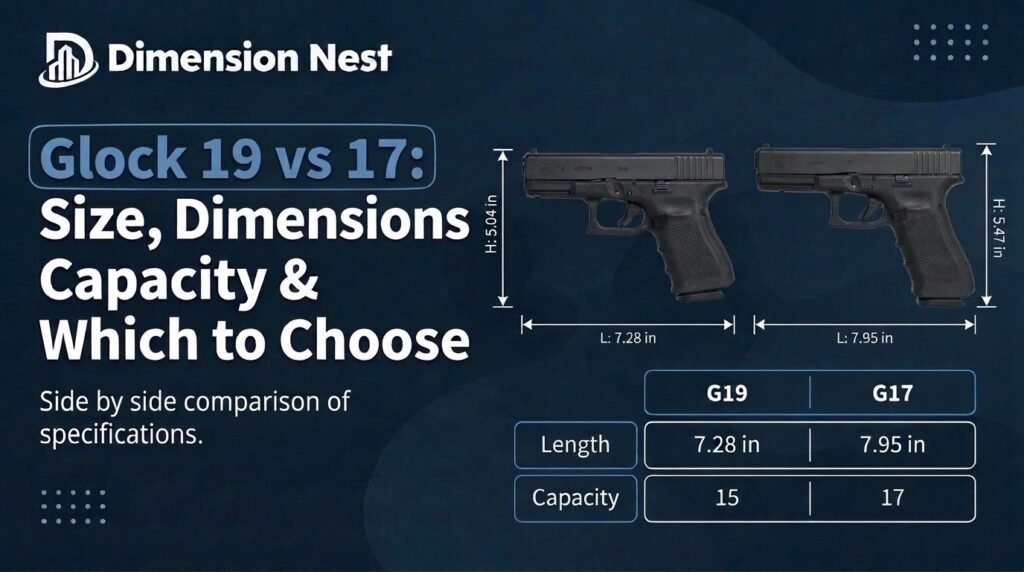
A first time buyer stands at a store counter, holding two black pistols that look nearly identical. The clerk explains that one measures slightly longer and taller, and that small gap shapes daily use. The glock 19 vs 17 debate centers on that gap, much like glock 43 vs 43x guides.
This guide compares both pistols by length, height, width, weight, barrel, sight radius, and magazine capacity. It also explains how each size fits concealed carry, home use, and range training for confident choices.
Quick Answer: What Is the Difference Between the Glock 19 vs 17?
The Glock 17 is a full size 9mm pistol, and the Glock 19 is its compact version. The Glock 17 usually measures about 0.7 inches longer and holds 17 rounds instead of 15. Both use the same caliber and controls, but the best choice depends on carry, home, or range priorities.
Glock 19 vs 17 at a Glance
Both pistols come from the Austrian company Glock and share the same trigger system and polymer frame. The Glock 17 arrived in 1982, and the Glock 19 followed in 1988 as a shorter, portable option. Their family resemblance makes them easy to confuse, so measurements matter more than looks.
| Feature | Glock 19 Gen5 | Glock 17 Gen5 |
|---|---|---|
| Size class | Compact | Full size |
| Caliber | 9x19mm | 9x19mm |
| Overall length | About 7.28 in (185 mm) | About 7.95 in (202 mm) |
| Height with magazine | About 5.04 in (128 mm) | About 5.47 in (139 mm) |
| Width | About 1.34 in (34 mm) | About 1.34 in (34 mm) |
| Barrel length | About 4.02 in (102 mm) | About 4.49 in (114 mm) |
| Standard capacity | 15 rounds | 17 rounds |
| Weight with empty magazine | About 23.6 oz (670 g) | About 25.3 oz (717 g) |
The table shows that width stays identical, while length, height, and capacity create every meaningful difference between them.
In simple words, the Glock 19 is a Glock 17 with a shorter slide and a shorter grip. That description explains why both pistols feel familiar in the hand while serving slightly different daily roles. Figures above follow Glock’s published Gen5 specifications, and earlier generations vary by small amounts.
Glock 19 vs 17 Dimensions Explained
Dimensions decide how a pistol fits a holster, a safe, or a person’s body during daily carry. Small changes of half an inch often feel larger in practice than they look on paper. The sections below break down each measurement and explain what it means for real owners.
Overall Length
The Glock 17 measures roughly 7.95 inches from muzzle to rear, and the Glock 19 measures 7.28. That gap of about 0.67 inches comes almost entirely from the longer Glock 17 slide and barrel. Longer pistols usually print more under clothing, but they also balance more steadily during aimed shooting.
Height
Height runs from the slide top to the magazine bottom, and it affects concealment the most. The Glock 17 stands about 5.47 inches tall, while the Glock 19 stands about 5.04 inches tall. The grip difference of nearly half an inch decides whether a shooter fits three or four fingers comfortably.
Width
Both pistols share the same width of about 1.34 inches at their widest point near the slide stop. Identical width means holsters, safes, and storage cases often fit both models with only small length adjustments. Owners who want a slimmer pistol usually look at single stack models instead of either of these two.
Weight
The Glock 19 weighs about 23.6 ounces with an empty magazine, and the Glock 17 weighs 25.3. Loaded weights climb further because every 9mm cartridge adds roughly 0.4 ounces, depending on bullet type. A difference near two ounces sounds small, but it becomes noticeable after a full day of belt carry.
| Measurement | Difference | Practical effect |
|---|---|---|
| Length | About 0.67 in | Holster depth and printing |
| Height | About 0.43 in | Grip size and concealment |
| Width | None | Same holster width |
| Weight | About 1.7 oz | Carry comfort over long days |
| Capacity | 2 rounds | Fewer reloads at the range |
The table shows that height and length drive most practical differences, while width stays exactly the same.
Glock 19 vs 17 Barrel and Sight Radius
Barrel length and sight radius influence velocity, recoil feel, and how easily shooters line up their sights. The Glock 17 barrel measures about 4.49 inches, while the Glock 19 barrel measures about 4.02 inches. That extra length usually adds a little bullet velocity, although the gain rarely matters for typical use.
Sight radius measures the distance between the front and rear sights along the top of the slide. The Glock 17 offers roughly 6.49 inches of sight radius, while the Glock 19 offers about 6.02 inches. A longer radius makes small aiming errors easier to see, which helps newer shooters during slow precision practice.
Does a Longer Barrel Improve Accuracy?
Mechanical accuracy stays nearly identical between both pistols, because they share the same barrel design and manufacturing standards. Practical accuracy improves slightly with the Glock 17, mostly because the longer sight radius helps shooters notice errors. Skilled shooters usually perform almost equally well with either pistol at common self defense distances.
Recoil and Muzzle Flip
The Glock 17 feels softer to shoot because its extra weight and longer slide absorb more recoil. The Glock 19 still feels controllable for most adults, and many shooters notice only a small difference. Grip technique and practice usually matter far more than this small gap in slide length and weight.
Glock 19 vs 17 Magazine Capacity
The standard Glock 17 magazine holds 17 rounds of 9mm, and the Glock 19 magazine holds 15. Both pistols also accept extended magazines in many regions, although local laws often limit magazine capacity. Owners should check state and national rules before buying any magazine above ten rounds.
An interesting detail involves cross compatibility between the two magazine sizes in both pistols. A Glock 17 magazine works in a Glock 19, although it sticks out below the shorter grip. A Glock 19 magazine cannot serve a Glock 17, because it sits too high inside the longer grip.
| Magazine | Fits Glock 19 | Fits Glock 17 |
|---|---|---|
| Glock 19, 15 rounds | Yes, flush fit | No, too short |
| Glock 17, 17 rounds | Yes, extends below grip | Yes, flush fit |
| Glock 26, 10 rounds | Yes, short fit | No, too short |
The table shows that longer magazines work in shorter grips, while shorter magazines never work in longer grips.
Storage planning matters as well, since spare magazines and ammunition need safe, organized space at home. Many owners use sealed metal boxes, and ammo can size dimensions guides help them pick containers.
Which Is Better for Concealed Carry?
Most concealed carry users prefer the Glock 19 because its shorter grip hides more easily under ordinary clothing. The grip, not the slide, usually causes printing, because it sits above the belt line against the body. Shaving nearly half an inch from the grip makes a noticeable difference for many body types.
The Glock 17 can still work for concealed carry, especially for taller people who wear looser outer layers. Some carriers prefer its extra capacity and longer sight radius, and they accept the slightly harder concealment. Holster choice, belt quality, and carry position often matter as much as the pistol size itself.
Carry Positions and Pistol Size
Appendix carry usually favors the Glock 19, because the shorter slide sits comfortably when the wearer bends. Strong side hip carry handles the Glock 17 better, since the longer slide rests alongside the hip bone. Shoulder rigs and chest rigs accommodate both pistols easily, because concealment matters less in those setups.
Which Is Better for Home Use?
The Glock 17 often suits home use slightly better, because concealment no longer matters at home. Its longer grip, extra weight, and two additional rounds make it easier to shoot well under stress. Many owners also mount a light on the rail, and both pistols share compatible accessory rails.
The Glock 19 still performs well at home, especially when several adults with smaller hands share it. A single pistol for carry and home use often makes the Glock 19 the more practical choice overall. Every owner should store firearms securely, ideally in a quick access safe that protects children.
Which Is Better for Range Training and Competition?
Range shooters often choose the Glock 17 because its longer sight radius and softer recoil reward careful practice. Many entry level competitions accept both pistols, but full size models usually dominate open stock divisions. The extra two rounds per magazine also mean fewer reloads during long practice sessions.
The Glock 19 remains a great training pistol for daily carriers who practice with their actual carry gun. Training with the same pistol builds familiarity with its grip, trigger, and recoil under realistic conditions. Many instructors recommend practicing with the exact pistol a person plans to carry for protection.
Glock 19 vs 17 for Different Hand Sizes
Hand size affects comfort more than buyers expect, because both pistols share grip width and trigger reach. Small hands often prefer the Glock 19 because its shorter grip feels more manageable during a firm hold. Large hands often prefer the Glock 17, since the extra grip length fits all fingers without crowding.
| Hand size | Common preference | Reason |
|---|---|---|
| Small | Glock 19 | Shorter grip feels easier to hold |
| Medium | Either model | Both fit comfortably for most people |
| Large | Glock 17 | Full grip fits every finger |
The table shows that medium hands fit both pistols well, while hand extremes push buyers toward one model.
Gen5 models include interchangeable backstraps that change the grip circumference slightly for different hand sizes. Buyers should hold both pistols in a store and test their natural grip before deciding. A proper fit usually improves accuracy, comfort, and confidence far more than any specification sheet suggests.
Glock 19 vs 17 for Travel and Storage
Owners who travel with a pistol, where local law allows it, often notice the size gap during packing. The shorter Glock 19 fits more compact lockable cases, while the Glock 17 needs a slightly longer interior. Airline and state transport rules differ widely, so owners should read official guidance before every trip.
Home storage follows the same logic, because quick access safes come in fixed interior sizes. Many compact safes fit both pistols, but some smaller models only accept the Glock 19 comfortably. Buyers should compare interior safe dimensions with the pistol’s length and height before ordering any storage product.
| Storage item | Glock 19 fit | Glock 17 fit |
|---|---|---|
| Small quick access safe | Usually fits | Check interior length |
| Standard pistol case | Fits | Fits |
| Vehicle console vault | Usually fits | Check interior length |
| Drawer safe | Fits | Usually fits |
The table shows that the Glock 19 fits small storage easily, while the Glock 17 needs measuring.
Measuring Before Buying Storage
Measure the pistol’s overall length, height with magazine, and width before comparing any safe or case online. Add at least one inch of clearance on each side, so the owner can grab the pistol quickly. Careful measuring avoids returns and keeps the pistol secure from children, visitors, and unauthorized users.
Holster and Accessory Compatibility
Holster makers usually design separate molds for each model, because length and height differ between the two pistols. Some open muzzle holsters accept both pistols, since the Glock 17 simply extends further past the bottom edge. Buyers should confirm compatibility on the manufacturer’s product page before purchasing any holster for either model.
Both pistols share the same accessory rail, so most lights and many sights fit both models. Optic ready MOS versions exist for both pistols, which lets owners mount small red dot sights. Grip accessories, sights, and slide parts often differ in length, so owners should match parts carefully.
Glock 19 vs 17 Across Generations
Glock has released both models in several generations, and each one changed grip texture, controls, and small parts. The core dimensions stayed close across generations, so the size comparison holds true for older and newer pistols. Buyers shopping used models should still check the generation, because some accessories differ between them.
| Generation | Notable changes | Effect on comparison |
|---|---|---|
| Gen3 | Finger grooves and accessory rail | Same size gap |
| Gen4 | Textured grip and backstraps | Same size gap |
| Gen5 | No finger grooves, flared magwell, new barrel | Same size gap |
The table shows that generation changes affect feel and features, while the size gap stays constant.
Gen5 Improvements
Gen5 models removed the finger grooves from the grip, which many shooters with different hand sizes welcomed. Glock also added an ambidextrous slide stop lever and a flared magazine well for faster reloads. The company describes a revised barrel that it says improves accuracy, although results depend on the shooter.
Buying Older Generations
Older Gen3 and Gen4 pistols remain common on the used market, and many owners still trust them fully. Buyers should inspect used pistols carefully or ask a qualified gunsmith to check wear and function. Holsters made for one generation usually fit others, but buyers should confirm compatibility for each model.
Glock 19 vs 17 Price and Availability
Both pistols usually sell at similar prices in most markets, because they share most parts and production methods. Price differences usually come from store promotions, generation, or optic ready slide options on certain versions. Buyers should compare prices across several licensed dealers before choosing a final purchase.
Availability stays strong for both models, since they rank among the most popular pistols in many countries. Spare magazines, holsters, and sights also stay easy to find for either model at most retailers. That wide support makes both pistols easy to maintain and accessorize over many years of ownership.
Total Cost of Ownership
The purchase price represents only part of the real cost of owning either pistol over many years. Training classes, practice ammunition, a quality holster, and a secure safe often add a large extra expense. Smart buyers plan this full budget early, so they never cut corners on safety or training.
Key Characteristics of the Glock 19 and Glock 17
These key characteristics summarize what each pistol does well for everyday owners:
- The Glock 19 offers a compact size that balances concealment, capacity, and comfortable shooting for most adults.
- The Glock 17 offers a full size grip, longer sight radius, and softer recoil for steady practice.
- Both pistols share the same 9mm caliber, trigger system, controls, and identical width across the slide.
- The Glock 17 holds two more rounds per standard magazine, which means fewer reloads during practice.
- Glock 17 magazines work in a Glock 19, but Glock 19 magazines never fit a Glock 17.
- Gen5 versions of both models include interchangeable backstraps for better grip fit across different hand sizes.
These characteristics show that neither pistol wins outright, because each one suits different priorities and body types.
Real World Example: Choosing Between Them
A buyer named Sara plans to carry a pistol daily and keep one ready at home. She has medium sized hands, wears fitted clothing at work, and can afford only one pistol this year. Her priorities point toward concealment first, with home use and training as secondary goals.
Sara holds both pistols at the store and finds that each one fits her grip comfortably without strain. The Glock 19 hides better under her fitted work clothes, while still offering fifteen rounds per magazine. She chooses the Glock 19 and buys spare Glock 17 magazines for home use and longer range sessions.
This example shows how real priorities, not specification sheets alone, usually decide the final choice. Buyers who list their main use first usually find the right size quickly and avoid expensive regret.
How to Choose Between the Glock 19 vs 17
A short decision process helps buyers move from confusion to a confident choice without wasting money. The steps below work for first time buyers and experienced owners adding another pistol.
Step 1: Define the Main Purpose
Decide whether daily carry, home use, or range training matters most before comparing any other specification. Carry usually favors the Glock 19, while home use and training often favor the Glock 17. A clear purpose removes most of the confusion that buyers feel during the comparison.
Step 2: Check Local Laws
Review local and national laws on ownership, carry permits, and magazine capacity before visiting any store. Some regions limit magazines to ten rounds, which removes much of the capacity advantage of either model. Legal requirements always come first, because they decide which options a buyer can actually choose.
Step 3: Hold Both Pistols
Visit a reputable store and hold both pistols with a firm grip while pointing them safely. Notice where each finger rests, how the trigger reach feels, and whether the grip feels crowded. Physical fit usually reveals a clear preference within a few minutes of careful handling.
Step 4: Rent Both at a Range
Many ranges rent both models, which lets buyers shoot each pistol before spending money on a purchase. Shooting reveals recoil feel, sight picture, and comfort that store handling alone cannot show. A short rental session often settles the decision more clearly than hours of online reading.
Step 5: Plan Holsters and Storage
Choose a quality holster, a sturdy belt, and a secure safe before bringing the pistol home. Proper gear makes carry more comfortable and keeps the pistol secure from children and unauthorized users. Responsible storage matters as much as choosing the right pistol size in the first place.
Common Mistakes When Comparing the Glock 19 vs 17
Buyers repeat several predictable mistakes when they compare these two pistols, especially on their first purchase. Avoiding these errors saves money and leads to a pistol that fits daily life better.
1. Judging Only by Capacity
Some buyers choose the Glock 17 simply because it holds two more rounds per standard magazine. That small capacity gain rarely outweighs comfort, concealment, and fit for most everyday owners. Buyers should weigh capacity alongside every other measurement instead of treating it as the only factor.
2. Ignoring Hand Size
Some buyers pick a model based on online reviews without ever holding either pistol in person. A pistol that feels awkward in the hand usually leads to poor accuracy and less practice. Holding both models in a store first prevents this common, frustrating, and expensive mistake.
3. Forgetting About Holsters
New owners sometimes buy a pistol and discover later that their preferred holster fits only the other model. Holster availability, carry position, and clothing style should guide the decision from the first day. Planning the full carry setup together avoids frustrating returns and wasted money.
4. Skipping Local Law Research
Some buyers purchase extended magazines or carry pistols without checking regional laws first. Legal mistakes can carry serious penalties, even when the owner acted without any bad intent. Reading official government sources and taking a certified safety course prevents these problems.
5. Treating Small Differences as Huge
Online debates sometimes exaggerate the gap between these two pistols as if one model clearly beats the other. Both pistols share the same reliability, caliber, and controls, so the difference stays mostly about size. Buyers should relax and focus on personal fit instead of chasing a perfect answer.
Tips for New Owners of Either Model
These tips help new owners of either pistol build safe habits and steady skills from day one:
- Take a certified firearm safety course before carrying or storing any pistol inside the home.
- Store every firearm in a locked safe or quick access box that keeps children and visitors safe.
- Practice regularly at a supervised range to build a consistent grip, trigger press, and sight picture.
- Choose a quality holster that fully covers the trigger guard and holds the pistol securely in place.
- Learn local laws on transport, carry, and storage, since rules differ across states and countries.
- Clean and inspect the pistol after range sessions so it stays reliable for many years.
These habits keep owners safe, legal, and confident, whichever of the two models they finally choose.
Glock 19 vs 17 Buying Checklist
Use this checklist before buying either pistol to confirm the decision fits real needs:
- Confirm the main purpose, whether daily carry, home use, range training, or a mix of all three.
- Check local laws on ownership, carry permits, transport, and magazine capacity limits before purchasing.
- Hold both pistols in person and compare grip fit, trigger reach, and overall comfort.
- Rent both models at a range when possible to compare recoil feel and sight picture directly.
- Choose a compatible holster, belt, and secure storage option before bringing the pistol home.
- Budget for training classes, practice ammunition, and cleaning supplies alongside the pistol price.
A buyer who completes this checklist usually ends up with a pistol that fits daily life comfortably.
Frequently Asked Questions
What is the main difference in the Glock 19 vs 17?
The main difference in the glock 19 vs 17 comparison is size, since the Glock 17 runs larger. The Glock 17 also holds 17 rounds, while the Glock 19 holds 15 rounds in standard magazines.
Is the Glock 19 smaller than the Glock 17?
The Glock 19 is smaller than the Glock 17 in length, height, and weight, but not width. The Glock 19 measures about 0.67 inches shorter and about 0.43 inches lower overall.
Can a Glock 19 use Glock 17 magazines?
A Glock 19 can use Glock 17 magazines, and they work reliably while extending below the shorter grip. A Glock 17 cannot use Glock 19 magazines, because they sit too high inside the longer grip.
Which is better for beginners, Glock 19 vs 17?
For beginners, the glock 19 vs 17 choice depends on the main purpose and the shooter’s hand size. Many beginners find the Glock 17 easier to shoot, while carriers often prefer the smaller Glock 19.
Is the Glock 17 more accurate than the Glock 19?
The Glock 17 offers a longer sight radius, which helps many shooters notice aiming errors more easily. Mechanical accuracy stays nearly identical, so skilled shooters perform almost equally well with both pistols.
Do the Glock 19 and Glock 17 use the same holster?
The Glock 19 and Glock 17 usually need different holsters, because their lengths and heights differ slightly. Some open muzzle holsters fit both models, so buyers should confirm compatibility with the maker.
How much does the Glock 19 weigh compared to the Glock 17?
The Glock 19 weighs about 23.6 ounces with an empty magazine, and the Glock 17 weighs 25.3. Loaded weights rise further, depending on the ammunition type and magazine capacity used.
Which came first, the Glock 17 or Glock 19?
The Glock 17 came first in 1982, and it became the company’s original and most famous pistol. Glock introduced the Glock 19 in 1988 as a compact version for easier carry.
Is the Glock 19 good for home defense?
The Glock 19 works well for home defense, especially when one pistol serves carry and home roles. Owners should store it securely in a quick access safe that keeps children and visitors protected.
Does the glock 19 vs 17 choice affect recoil?
The glock 19 vs 17 choice affects recoil slightly, because the heavier Glock 17 absorbs more recoil. Most adult shooters notice only a small difference, and grip technique matters far more than model choice.
Key Takeaways
- The Glock 17 is a full size 9mm pistol, and the Glock 19 is its compact version.
- The Glock 17 measures about 0.67 inches longer and about 0.43 inches taller than the Glock 19.
- Both pistols share the same width of about 1.34 inches, so width never separates the two models.
- Standard magazines hold 17 rounds in the Glock 17 and 15 rounds in the Glock 19.
- Glock 17 magazines work in a Glock 19, but shorter Glock 19 magazines never fit a Glock 17.
- The Glock 17 offers a longer sight radius and softer recoil, which helps steady range practice.
- The Glock 19 usually conceals more easily, because its shorter grip prints less under ordinary clothing.
- Hand size, main purpose, and local laws should guide the final choice more than online debates.
- Secure storage, certified training, and quality holsters matter as much as choosing the right pistol size.
Final Thoughts
The glock 19 vs 17 decision comes down to size, because both share caliber, controls, and reliability. The Glock 19 suits daily carry and smaller hands, and the Glock 17 suits home and range use. Buyers who define their purpose, hold both models, and follow local laws usually make the right choice quickly.
Responsible ownership matters most, so every buyer should invest in secure storage and certified safety training. Those habits protect families and build the steady skills that make either pistol a dependable choice.
Explore more helpful size and dimension comparison guides on DimensionNest.