
 Abdul Moeed
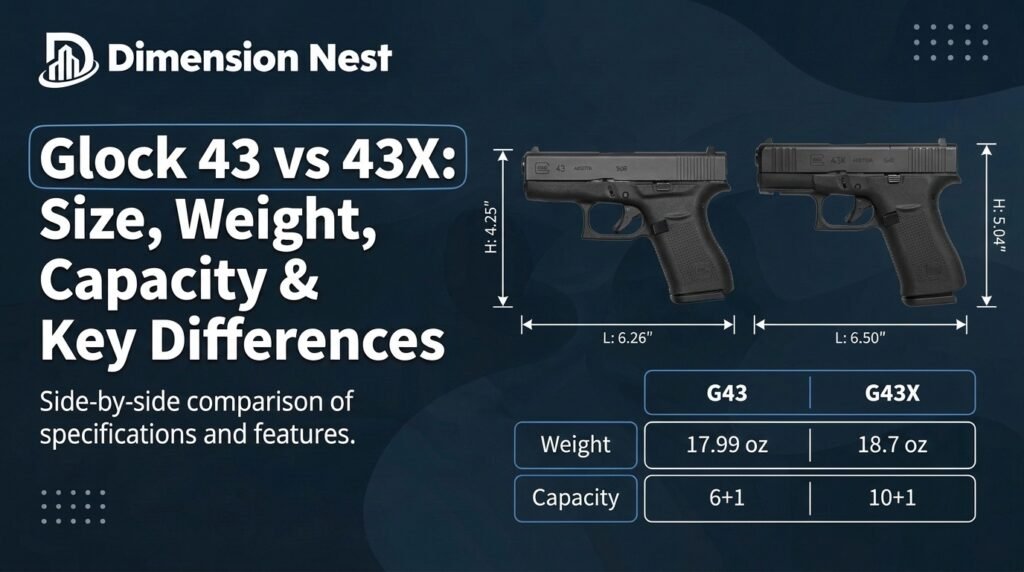
Two slim Glock pistols sit side by side on a gun store counter, and they look almost identical. The Glock 43 vs 43X question comes up for nearly every buyer of a small 9mm. The two models share a barrel length and a caliber, yet their grips tell different stories.
Our breakdown of iphone 17 pro vs pro max proved that size comparisons need real numbers. This guide lists the exact dimensions, weights, and capacities of both pistols in inches and millimeters. It also covers concealment, shooting comfort, holsters, accessories, and the mistakes buyers make most often.
All figures below come from published factory specifications, so readers should confirm them with dealers. Laws on purchase and carry vary by state and country, so local rules always come first.
Quick Answer: What Is the Difference Between the Glock 43 and 43X?
The Glock 43 holds six rounds in a short grip, while the 43X holds ten. Both pistols share the same 3.41 inch barrel, though the 43X carries a taller grip. The 43 conceals slightly easier, while the 43X usually feels more comfortable and stable during practice.
Glock 43 vs 43X at a Glance
Before the detailed sections, a side by side table gives the headline numbers for both models.
| Spec | Glock 43 | Glock 43X |
|---|---|---|
| Caliber | 9mm Luger | 9mm Luger |
| Standard capacity | 6+1 | 10+1 |
| Overall length | 6.26 in (159 mm) | 6.50 in (165 mm) |
| Height | 4.25 in (108 mm) | 5.04 in (128 mm) |
| Width | 1.06 in (27 mm) | 1.10 in (28 mm) |
| Barrel length | 3.41 in (87 mm) | 3.41 in (87 mm) |
| Weight loaded | 20.64 oz (585 g) | 23.07 oz (654 g) |
| Year introduced | 2015 | 2019 |
The height gap of about 0.8 inches matters most, because it decides grip size and concealment.
What Is the Glock 43?
The Glock 43 arrived in 2015 as the company’s first single stack 9mm pistol. Glock built it for people who wanted a slim and light 9mm for everyday concealed carry. Its single stack magazine holds six rounds, plus one in the chamber.
The pistol uses the standard Glock Safe Action trigger with no manual thumb safety. Its short grip leaves room for only two fingers on many adult hands. Shooters often add an extended magazine base plate to gain a little more grip space.
Many owners praise the Glock 43 for its compact footprint inside a waistband holster. It disappears under a light shirt more easily than larger Glock models like the Glock 19.
What Is the Glock 43X?
The Glock 43X launched in early 2019 alongside the longer slide Glock 48. Glock calls both pistols part of its Slimline series, which uses a slim double column magazine. That magazine holds ten rounds while keeping the grip almost as narrow as the original 43.
The 43X keeps the short 3.41 inch barrel and similar slide length from the 43. Its grip grows taller to fit the larger magazine and a full three finger hold. Glock offers 43X versions with an optic ready slide and versions with an accessory rail.
The 43X quickly became popular among people who found the original 43 too small to shoot comfortably. Many instructors describe it as a balance point between concealment and shootability.
Glock 43 vs 43X: Size Comparison in Detail
Size drives most buying decisions for these two slim and popular carry pistols. The sections below break down each dimension and explain how it changes daily carry.
Length
The Glock 43 measures 6.26 inches long, while the 43X measures 6.50 inches long. This difference of about a quarter inch comes mostly from frame shape, not the barrel. Both slides sit at nearly the same length, so holster depth stays similar inside the waistband.
Height
Height marks the biggest difference between the two pistols in every published spec sheet. The Glock 43 stands 4.25 inches tall, while the 43X stands 5.04 inches tall. That extra 0.79 inches sits entirely in the grip, where it affects both comfort and printing.
Width
The Glock 43 measures 1.06 inches wide, while the 43X measures 1.10 inches wide. A difference of four hundredths of an inch rarely changes how either pistol feels on the belt. Both models count among the slimmest 9mm pistols in the Glock catalog.
Weight
Loaded, the Glock 43 weighs about 20.64 ounces, and the 43X weighs about 23.07 ounces. The extra weight comes mainly from four more rounds and a slightly larger frame. Most carriers notice little difference after a day of wearing either one on a good belt.
Height difference: 5.04 in minus 4.25 in = 0.79 in (about 20 mm)
Capacity difference: 10 rounds minus 6 rounds = 4 rounds
The simple math above shows why the 43X trades a little grip height for noticeably more capacity.
How Does Capacity Compare?
The Glock 43 ships with six round magazines, and Glock also sells an extended version. The 43X ships with ten round magazines that fill its taller grip from top to bottom. Some aftermarket companies sell higher capacity magazines for the 43X, though reliability depends on the product.
Capacity matters, but reliable function matters more than any extra round count. Owners should test any aftermarket magazine thoroughly at the range before trusting it for carry. Local laws in some states also limit magazine capacity, so buyers must check rules first.
| Magazine option | Glock 43 | Glock 43X |
|---|---|---|
| Factory standard | 6 rounds | 10 rounds |
| Factory extended | Available | Not needed for most users |
| Aftermarket higher capacity | Limited options | Several options |
| Interchangeable with each other | No | No |
The magazines do not interchange, so owners of both pistols need separate spare magazines.
Glock 43 vs 43X: Which Conceals Better?
Concealment depends mostly on grip length, because the grip pokes out against clothing first. The shorter Glock 43 grip prints less under tight shirts and when the carrier bends forward. This makes the 43 a common pick for pocket holsters, ankle carry, and summer clothing.
The 43X still conceals well for most body types inside a quality waistband holster. A good holster with a claw or wing pushes the grip toward the body and reduces printing. Many people carry the 43X daily with no visible outline under a loose shirt.
Body shape, clothing style, and holster position all matter as much as the pistol itself. A taller person often conceals the 43X as easily as a shorter person conceals the 43.
Glock 43 vs 43X: Which Shoots Better?
The 43X usually shoots more comfortably because the full grip gives the hand more control. Three fingers on the grip help manage recoil and allow faster follow up shots. New shooters often score tighter groups with the 43X during their first few range sessions.
The Glock 43 kicks a little sharper because the hand holds less of the frame. Experienced shooters handle it well, though long practice sessions can feel tiring for the hands. An extended magazine base plate helps many shooters gain a steadier grip on the 43.
Both pistols share the same sights, trigger system, and barrel length, so accuracy potential stays similar. The difference shows up mainly in comfort and speed instead of raw precision.
Glock 43 vs 43X Feature Comparison
Beyond size, the two pistols differ in available versions and factory features. The table below compares the main options buyers can find in stores.
| Feature | Glock 43 | Glock 43X |
|---|---|---|
| Optic ready MOS version | Not offered from the factory | Offered |
| Accessory rail version | Not offered from the factory | Offered |
| Silver slide option | Limited editions | Common |
| Trigger system | Safe Action | Safe Action |
| Manual thumb safety | No | No |
The 43X offers more factory versions, which suits buyers who want a red dot or a light.
Optic ready slides let owners mount small red dot sights without custom slide cuts. Rail versions accept compact weapon lights for low light situations at home or outdoors. Buyers should confirm which version a store carries, because box labels and slide markings differ.
Glock 43 and 43X Compared With Other Popular Glocks
Size numbers make more sense when placed beside other well known Glock pistols. The table compares both slim models with the Glock 48 and the popular Glock 19.
| Model | Height | Width | Barrel length | Standard capacity |
|---|---|---|---|---|
| Glock 43 | 4.25 in | 1.06 in | 3.41 in | 6+1 |
| Glock 43X | 5.04 in | 1.10 in | 3.41 in | 10+1 |
| Glock 48 | 5.04 in | 1.10 in | 4.17 in | 10+1 |
| Glock 19 | 5.04 in | 1.34 in | 4.02 in | 15+1 |
The 43X matches the Glock 19 in height but stays about a quarter inch slimmer across the frame.
The Glock 48 pairs the 43X grip with a longer slide and barrel for a longer sight radius. Buyers who carry outside the waistband sometimes prefer the 48 for its smoother shooting feel. The Glock 19 holds more rounds but adds width, which many carriers notice on the hip.
Sights and Trigger on the Glock 43 and 43X
Both pistols ship with Glock’s standard polymer sights in most markets and configurations. Many owners replace them with steel or night sights for better durability and low light visibility. The sight swap process stays the same for both models, so one gunsmith visit handles either pistol.
The Safe Action trigger on both pistols usually breaks at around five to six pounds. Trigger feel stays almost identical, though some shooters report a smoother feel on newer production pistols. Neither model includes a manual thumb safety, so holster quality and trigger discipline matter greatly.
A covered trigger guard is the single most important safety feature in any carry holster. Owners should never carry either pistol loose in a pocket or bag without a proper holster.
Recoil and Comfort by Hand Size
Hand size shapes the shooting experience more than any other personal factor. The table gives general patterns that many firearms instructors observe during beginner classes.
| Hand size | Glock 43 experience | Glock 43X experience |
|---|---|---|
| Small | Comfortable two finger grip | Full grip, easy control |
| Medium | Pinky often hangs below the grip | Full three finger grip |
| Large | Feels cramped without a base plate | Comfortable with room to spare |
Medium and large hands usually favor the 43X, while small hands often handle both pistols well.
Recoil feels sharper in smaller pistols because less mass and less grip area absorb the movement. The 43X adds a few ounces, and its longer grip spreads the force across the hand. That spread explains why many shooters report less fatigue after long practice sessions with the 43X.
Glock 43 vs 43X by Carry Position
Carry position changes which pistol works best for a particular person and wardrobe. The table compares common positions and the model that usually suits each one.
| Carry position | Better fit | Reason |
|---|---|---|
| Appendix inside waistband | Either | Both slides sit short and slim |
| Strong side inside waistband | 43X | Taller grip stays manageable behind the hip |
| Pocket carry | Glock 43 | Shorter grip fits deeper pockets |
| Ankle carry | Glock 43 | Lighter weight and shorter frame |
| Outside waistband | 43X | Fuller grip helps a fast draw |
Pocket and ankle carriers usually lean toward the 43, while belt carriers often prefer the 43X.
Appendix carry places the grip in front of the body, where grip length affects printing most. Strong side carry hides grip length better because the body’s natural curve covers the frame. Each person should test positions with an unloaded pistol and a quality holster before committing.
Reliability and Maintenance
Both pistols share Glock’s reputation for simple design and dependable function across many conditions. They use few parts, and owners can field strip either one without tools in under a minute. Basic cleaning involves the barrel, slide rails, and recoil spring assembly after each range session.
Recoil springs in small pistols wear faster than springs in larger models because they handle sharper forces. Many owners replace the recoil spring assembly after several thousand rounds, following Glock’s service guidance. A local Glock armorer can inspect either pistol and replace worn parts during routine service.
Price and Value
The Glock 43 and 43X usually sell at similar prices in most American gun stores. Optic ready and rail versions of the 43X usually cost a little more than standard versions. Prices change by region, retailer, and season, so buyers should compare several local stores.
Value depends on accessories as much as the pistol itself, because holsters and sights add cost. Buyers who want a red dot often save money with a factory optic ready 43X. Buyers who want the smallest possible pistol may find better value in the standard Glock 43.
Benefits of the Glock 43
The original Glock 43 still offers clear advantages for certain carriers and wardrobes:
- The short grip conceals easily under fitted shirts, light jackets, and summer clothing.
- Its light loaded weight makes all day carry comfortable for people with active jobs.
- The compact frame fits pocket and ankle holsters better than most other Glock models.
- A large market of holsters, sights, and base plates supports the pistol widely.
Benefits of the Glock 43X
The Glock 43X brings its own set of strengths for daily carry:
- Ten round standard magazines give carriers four more rounds than the original Glock 43.
- The full three finger grip improves recoil control, comfort, and follow up shot speed.
- Factory optic ready and rail versions let owners add red dots and lights easily.
- The slim width keeps concealment close to the original 43 for most body types.
How Do Holsters Differ for the Glock 43 and 43X?
Holster fit depends mostly on the slide and frame shape around the trigger guard. The 43 and 43X share nearly identical slide dimensions, yet many holsters still list them separately. Some holster makers sell one model for both pistols, while others mold each one separately.
Buyers should always check the holster maker’s fit list before ordering for either pistol. Rail and optic versions often need different holsters because the added parts change the outline. A poor fitting holster can loosen the grip on the pistol or leave the trigger exposed.
Our article on qled vs uhd shows how small spec gaps change real daily use. A few millimeters of difference decide whether a holster clicks securely or rattles loosely.
Who Should Choose the Glock 43?
The Glock 43 suits people who put deep concealment ahead of every other feature. Carriers with small hands often find its grip comfortable without any added base plates. People who wear fitted clothing every day also benefit from its shorter grip.
Backup carry forms another strong use case for the original single stack pistol. Some carriers keep a Glock 43 in an ankle holster alongside a larger primary pistol. Its light weight and short frame make that second pistol easier to forget during the day.
Who Should Choose the Glock 43X?
The Glock 43X suits people who want more rounds and a fuller grip in a slim package. New shooters often build skills faster with the 43X because recoil feels easier to manage. Carriers who plan to add a red dot or weapon light also gain from its factory versions.
People with medium or large hands usually prefer the 43X after a short range session. Its grip gives the whole hand a place to rest, which builds confidence during practice. Many carriers call it the best compromise between a tiny pocket pistol and a full size duty gun.
Glock 43 vs 43X for Home Use
Some buyers want one pistol for both carry and home protection to keep costs and training simple. The 43X usually fits this dual role better because of its capacity and steadier grip. A rail version also allows a weapon light, which helps identify targets in dark rooms.
Home storage still requires a quick access safe or lock box that keeps children away. Owners should store ammunition and pistols according to local laws and safe storage best practices. Larger pistols may suit home use better, though one familiar pistol often beats two unfamiliar ones.
Do Aftermarket Parts Change the Comparison?
The aftermarket for both pistols includes base plates, sights, triggers, and replacement slides. Extended base plates can add a finger of grip space to the Glock 43 for a steadier hold. Higher capacity magazines for the 43X can push its round count past the factory ten.
These parts narrow some gaps, but they also add cost and possible reliability concerns. Do not carry any modified pistol before testing it with several hundred rounds of carry ammunition. Factory configurations remain the safest baseline for anyone new to concealed carry.
Real World Example: Choosing Between the Two
Consider a fictional buyer named Daniel who wants a 9mm for daily concealed carry. Daniel wears fitted shirts at work and spends weekends hiking in light clothing. He also plans to practice at the range twice a month with a local instructor.
At the store, he holds both pistols and finds that his pinky slips off the Glock 43. The 43X fills his whole hand and feels steadier during dry handling. He rents both at a range and shoots tighter groups with the 43X after fifty rounds each.
Daniel buys the 43X with a quality waistband holster that tucks the grip close. The example is invented, but it mirrors how many buyers settle this choice in practice.
How to Choose Between the Glock 43 and 43X
A simple step by step method helps buyers pick the right pistol for their needs.
Step 1: Check Local Laws First
Every buyer must confirm purchase, carry, and magazine capacity laws where they live. Some areas restrict magazines, and others require permits before any concealed carry.
Step 2: Hold Both Pistols
Grip both models in a store and note how many fingers fit on each frame. Hand size often settles the choice faster than any spec sheet or online review.
Step 3: Shoot Both at a Rental Range
Many ranges rent both pistols, which gives buyers real recoil and accuracy experience. Firing at least fifty rounds through each one reveals comfort differences clearly.
Step 4: Match the Pistol to Clothing
List the clothes worn most days and test concealment with an unloaded pistol and holster. Tight clothing usually favors the 43, while looser clothing usually suits the 43X.
Step 5: Plan for Accessories
Decide whether a red dot sight or weapon light matters before buying either model. The 43X offers factory versions for both, which saves money compared with custom work.
Step 6: Budget for Training
Set aside money for professional training, quality holsters, sturdy belts, and practice ammunition. Skill with either pistol matters far more than the small differences between them.
Common Mistakes When Comparing the Glock 43 and 43X
Buyers often repeat a handful of errors that lead to regret later. The five errors below appear most often in gun store conversations and online forums.
1. Judging Only by Spec Sheets
Numbers help, but hand fit and recoil feel matter more for daily confidence. Buyers who never hold both pistols often choose the wrong one for their hands.
2. Assuming the Magazines Interchange
The Glock 43 and 43X use different magazines that do not fit each other. Owners of both models must buy separate spare magazines for each of their pistols.
3. Buying a Holster Before the Pistol
Holster fit changes between standard, optic, and rail versions of each model. Buyers should choose the exact pistol first and then buy a matching holster.
4. Skipping Range Practice
A new carry pistol needs practice before anyone trusts it for daily protection. Skills fade quickly without regular dry practice and supervised live fire sessions at a range.
5. Ignoring Belt Quality
A thin fashion belt lets any pistol sag, which increases printing and discomfort. A stiff gun belt keeps either model stable and close to the body.
Tips for Carrying the Glock 43 or 43X
Owners can improve comfort and safety with six simple habits every single day:
- Use a quality holster that fully covers the trigger guard on every carry day.
- Wear a stiff gun belt that supports the pistol weight without sagging during movement.
- Practice drawing from concealment with an unloaded pistol under qualified instruction first.
- Clean and inspect the pistol regularly, especially after range sessions or heavy sweating.
- Store the pistol securely at home, away from children and unauthorized visitors at all times.
- Carry spare magazines only after testing them thoroughly for reliable feeding at the range.
Glock 43 vs 43X Buyer Checklist
Buyers can use this short checklist before visiting a store or rental range:
- Confirm local purchase, carry, and magazine laws before spending any money on a pistol.
- Hold both models and note how many fingers fit on each grip comfortably.
- Rent both pistols at a range and compare recoil, speed, and accuracy directly.
- Decide whether a red dot sight or weapon light matters for daily carry needs.
- Check holster fit lists for the exact version, including any optic or rail models.
- Budget for training, practice ammunition, a quality belt, and a secure storage solution.
Questions to Ask at the Gun Store
A short list of questions helps buyers get useful answers from store staff. Asking which versions the store stocks avoids confusion between standard, optic ready, and rail models. Buyers should also ask whether the store offers a rental range for trying both pistols.
Another useful question covers holsters and belts that the store has tested with each model. Staff who carry these pistols often know which holsters print least for different body types. Buyers can also ask about local training classes that cover safe carry and storage.
Finally, buyers should ask about warranty service, armorer support, and return policies before paying. These answers matter long after the excitement of a new purchase fades. A store that explains these details clearly usually supports customers well after the sale.
Frequently Asked Questions
Is the Glock 43 smaller than the 43X?
Yes, the Glock 43 is smaller in the Glock 43 vs 43X comparison, mainly in height. It stands 4.25 inches tall, while the 43X stands 5.04 inches tall.
Do the Glock 43 and 43X have the same barrel length?
Both pistols use a 3.41 inch barrel, which equals about 87 millimeters. The main Glock 43 vs 43X size gap sits in the grip height, not the barrel.
How many rounds does the Glock 43X hold?
The Glock 43X holds ten rounds in its standard magazine, plus one in the chamber. The Glock 43 holds six rounds in its standard magazine, plus one chambered.
Can a Glock 43 use 43X magazines?
No, the Glock 43 cannot use 43X magazines because the magazine designs differ. Owners comparing Glock 43 vs 43X must buy separate magazines for each pistol.
Which is better for concealed carry, the Glock 43 or 43X?
The Glock 43 usually conceals slightly easier because its grip sits about 0.8 inches shorter. The 43X still conceals well for most people with a quality waistband holster.
Which is easier to shoot, the Glock 43 or 43X?
Most shooters find the 43X easier to shoot because its taller grip fits three fingers. That extra grip space improves recoil control and follow up shot speed.
How much does the Glock 43X weigh?
The Glock 43X weighs about 23.07 ounces loaded, which equals about 654 grams. The Glock 43 weighs about 20.64 ounces loaded, which equals about 585 grams.
Does the Glock 43X come optic ready?
Glock offers a 43X MOS version with an optic ready slide from the factory. The standard Glock 43 does not come in a factory optic ready version.
Do the Glock 43 and 43X fit the same holster?
Some holsters fit both pistols, but many makers list each model separately. Buyers should always check the holster maker’s fit list for their exact Glock 43 vs 43X version.
Which Glock is best for beginners, the 43 or 43X?
Many instructors suggest the 43X for beginners because the fuller grip feels steadier. Beginners should still try both models and take professional training before carrying either pistol.
Key Takeaways
- The Glock 43 holds six rounds, while the Glock 43X holds ten rounds in standard magazines.
- Both pistols use the same 3.41 inch barrel and fire the 9mm Luger cartridge.
- The 43X grip stands about 0.79 inches taller, which marks the biggest size difference.
- The Glock 43 measures 4.25 inches tall, while the 43X measures 5.04 inches tall.
- Width differs by only four hundredths of an inch between the two slim pistols.
- The 43X weighs about 2.4 ounces more when both pistols carry fully loaded magazines.
- The shorter Glock 43 grip usually prints less under tight or summer clothing.
- The taller 43X grip usually improves recoil control and comfort during range practice.
- Magazines for the two pistols do not interchange, so owners need separate spares.
- The 43X offers factory optic ready and rail versions for red dots and lights.
- Holster fit varies by version, so buyers should check fit lists before ordering.
- Local laws, hand size, and training goals should guide the final choice between them.
Final Thoughts
The Glock 43 vs 43X decision comes down to grip height, capacity, and personal comfort. The 43 wins for deep concealment, while the 43X wins for shootability and capacity. Buyers who hold, shoot, and test both pistols usually find their answer within a single range visit.
Explore more size and dimension comparison guides on DimensionNest.